
How London's small businesses store stock, tools and documents, and what to look for in a facility.

Most small businesses outgrow their space fast. What starts as a spare room or a corner of the garage fills up with stock, tools or paperwork within a year or two, and it stops being spare at all.
This guide walks through where that stuff usually ends up, what a decent facility needs to offer, and how to tell when self storage is the right move for the business.

Give your business room to grow
What do small businesses store?
More than most self storage pages assume. Four categories cover most of it:
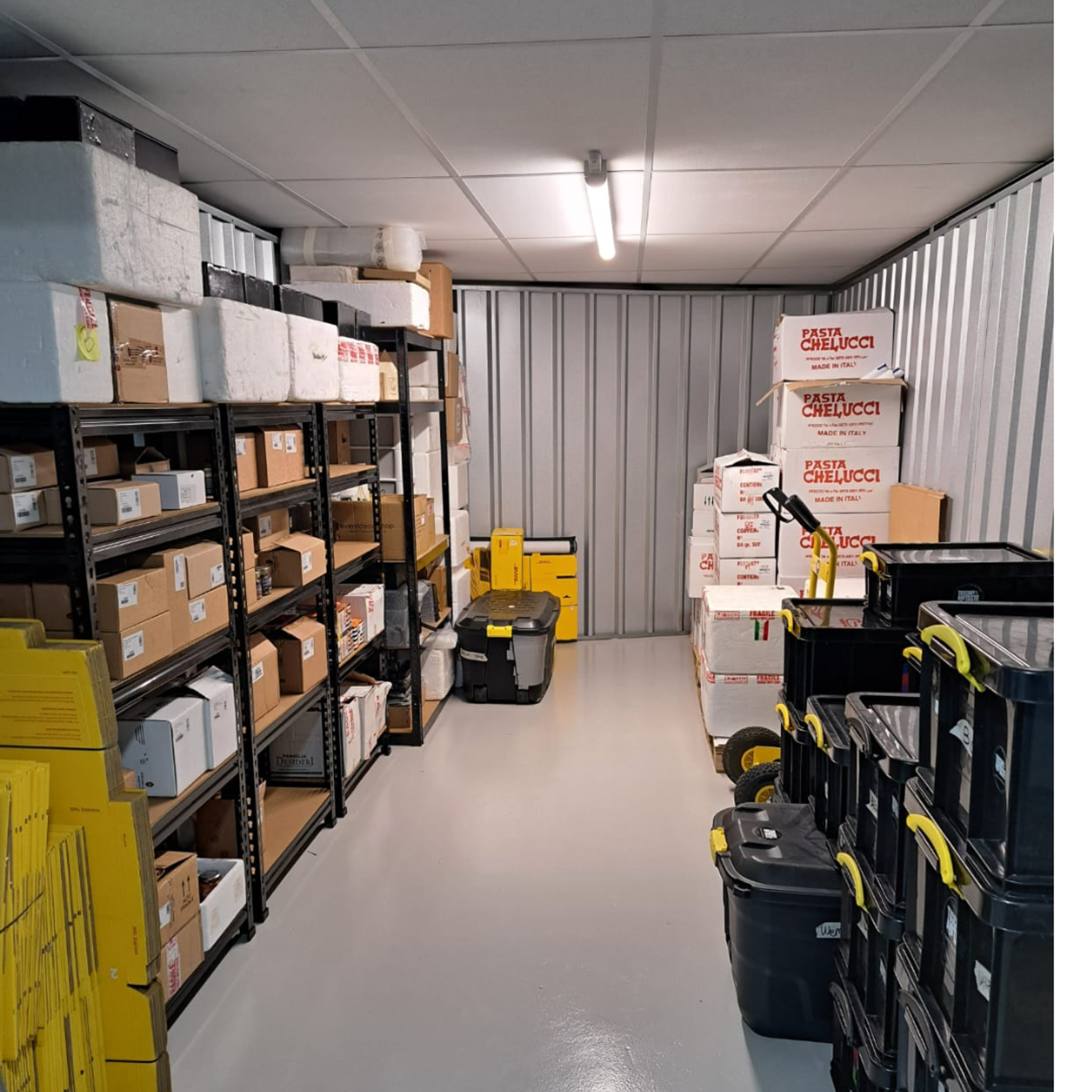
Stock and inventory: Retailers and product businesses storing what they sell, from a few boxes to a full season's range.
Tools and materials: Trades and contractors storing kit between jobs: power tools, ladders, materials bought in bulk for a project. Some use their unit as a proper workshop between sites, checking and prepping tools rather than just parking them.
Documents and archives: Professional services and admin-heavy businesses storing client files, financial records and anything that needs keeping but not keeping on a desk.
Equipment and office overflow: Old furniture, retired IT kit, seasonal stock, anything that's outgrown the office without earning a skip.
Where do small businesses keep stock and equipment?
Most start at home or in whatever spare space the business already has. It works until stock outgrows the spare room or a client meeting gets awkward around a stack of moving boxes.
From there, the usual options are a rented lock-up, extra office or commercial space, or self storage.
It's a pattern HOLD sees often: businesses moving out of a lock-up once they realise security meant a padlock and nothing else, and there was nobody around to take a delivery when they weren't on site.
Renting extra office or retail space solves the space problem, but it usually creates a bigger one: a commercial lease, business rates, and more square footage than a growing business needs on day one.
Self storage sits between the two: proper security, flexible size, no lease to get out of if the business changes direction. It's the right call once space at home or in a lock-up stops being enough, but a full commercial lease would be more than the business needs.
What small business storage needs to cover
Cost you can predict, without a promotional rate that quietly turns into a more expensive one
Access outside a 9-to-5 window, since small business hours rarely match a facility's
Someone to sign for deliveries when a supplier turns up and nobody's on site
Room to grow, or shrink, without a penalty for changing your mind
Security that goes beyond a padlock, given what's inside is often the whole business
Growing businesses need a few things at once, and most facilities only cover one or two of them.
HOLD covers all of it.
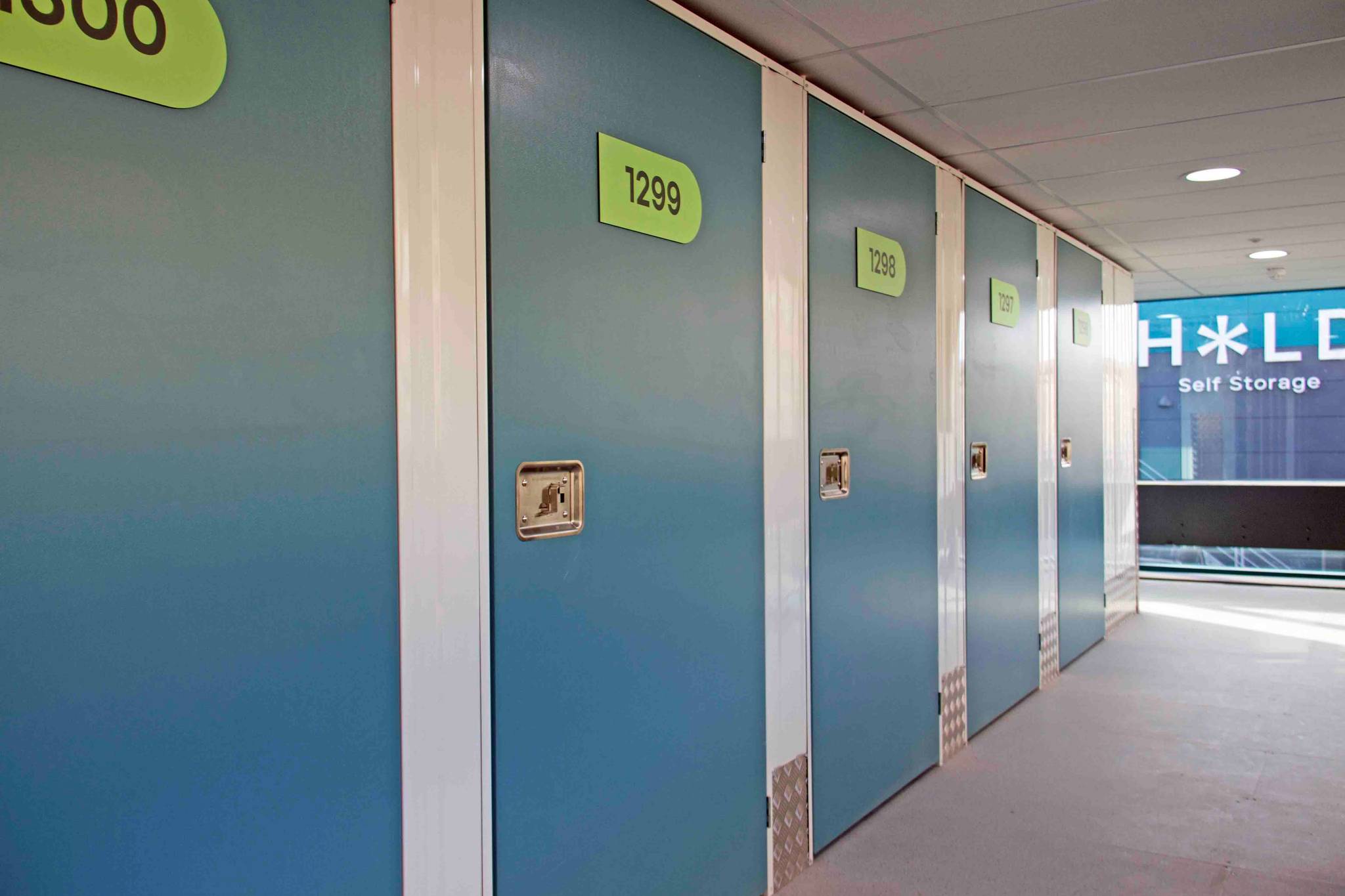
HOLD's small business storage features
- No fixed contract or business rates
- 24-hour access via personal PIN, free on request
- Deliveries accepted and held securely at reception
- Individually alarmed units, 24-hour CCTV, controlled entry
- Trolleys, pallet trucks and loading bays for getting stock in and out
- Units from 10 sq ft, upsized or downsized on flexible monthly terms
- Workpods, WiFi and meeting space on site for admin or supplier calls
All new HOLD customers pay £2 rent for their first month, and if a cheaper like-for-like quote turns up within 3 miles, HOLD will match it.



Demand doesn't stay flat for most small businesses.
Storage that scales with the season
A retailer might need double the space in November for Christmas stock, then a fraction of that by February. A trade business might go quiet over winter and just need somewhere to keep equipment until work picks up again. The details differ, but the space a business needs rarely stays the same size all year.
Most facilities lock you into whatever size you started with. If the business's needs shift, that means paying for space you're not using, or scrambling to find more room elsewhere. HOLD lets you upsize or downsize the actual unit on short notice, so the space keeps pace with the business as it changes.


Four things worth doing properly

Separate by type, not arrival date
Stock, tools and documents have different handling needs. Mixing them into whatever box was nearest at the time makes finding anything later a chore.

Keep what you reach for weekly near the door
Slow-moving stock or archived paperwork can go further back. What you touch every week shouldn't be behind it.

Label for someone who isn't you
If a partner, employee or delivery driver ever needs to find something without calling to ask, a system only you understand doesn't count as one.

Size for what the business needs today
It's tempting to book a bigger unit "just in case." With no long-term lease and no penalty for changing size, there's little reason to pay for space you don't need yet.
A base in the right part of London
Our Kings Cross facility sits at 260-276 York Way. This is outside the congestion charge zone, so regular van runs into central London don't add a daily charge on top. It's a short journey from Islington, Angel, Camden, Clerkenwell and Farringdon, with off-street parking and loading bays that make drop-offs straightforward.
Chiswick, Croydon and Woodford are opening soon, bringing the same setup closer to businesses in West, South and East London.
How much does small business storage cost in London?
HOLD's units start from £95.30 a month inc VAT for 10 sq ft, scaling up to £298 a month for 50 sq ft. Committing to a longer term brings the price down further:
- 5% off for 3 months
- 10% off for 6 months,
- 20% off for 12 months
For comparison, the SSA UK Annual Industry Report 2025 puts the London average for a 50 sq ft unit at around £220 a month inc VAT, lower than HOLD's own price at that size.
The difference comes down to two things:
The SSA figure is a London-wide average, blending cheaper outer areas with prime central ones, and King's Cross sits firmly in the latter, which carries its own premium.
Many providers charge extra for admin fees, security deposits and move-in support, costs HOLD includes as standard, along with a price match within 3 miles if a genuinely cheaper like-for-like quote turns up.
What different unit sizes fit:
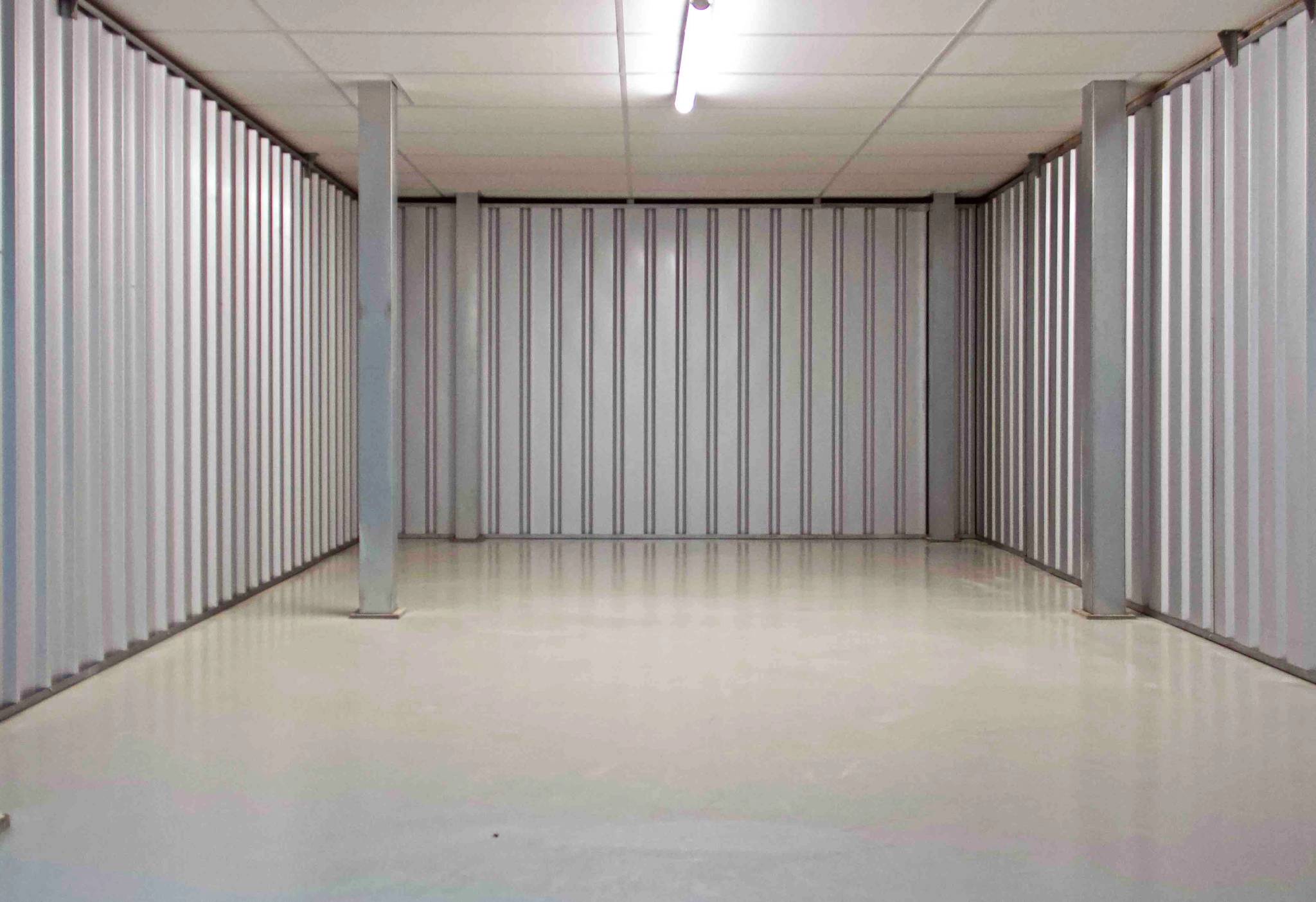
10 sq ft: archive boxes, files and a shelf or two
35 sq ft: stock for a small retail unit or online store
50 sq ft: tools and materials for a sole trader or small trades business
100 sq ft or more: palletised stock, a full season's range, or equipment for a growing team
300 sq ft: a full operation running from one unit
New HOLD customers pay £2 rent for their first month, with no business rates added on top and no long-term lease. Storage used for business purposes is also typically tax deductible as an allowable expense.
How we support our business customers



faqs
Yes, for the parts that involve stock, tools and admin. You can store inventory, prep orders, organise supplies, and receive deliveries. What you can't do is use a unit as your registered business address or base staff there day to day. HOLD's on-site workpods and meeting rooms cover that separately.
No. Storage units can't be used as a registered business address. HOLD offers a separate mailbox rental service which provides a central London address for business post and parcels.
Yes, you're responsible for insuring stock and equipment at replacement value. HOLD offers StoreProtect as an optional enhanced liability cover if you'd rather not arrange your own policy.
No. HOLD covers business rates on every unit, regardless of what kind of business you run, so the price you see is what you pay.
Yes. HOLD accepts deliveries at reception and holds them securely until you're next on site to move them in.
No. Storage is billed monthly with a £75 minimum spend rather than a fixed-term lease, 14 days' notice to leave, and a security deposit of around half a month's rent, refunded when you move out.
It depends entirely on what you're storing and how much of it. Our storage unit size guide is the practical starting point.
Often, yes, if it's used exclusively for business purposes such as stock, equipment or documents. It's treated as an allowable business expense under HMRC guidance, though it's worth confirming the detail with a tax professional for your specific situation.
Read our business articles

Can You Run a Business from a Storage Unit?
What's actually allowed if you're running a business out of a unit, and what it isn't approved for.

Can You Write Off a Storage Unit on Taxes? Tax Deduction Guidelines
When a storage unit counts as a tax-deductible expense, and when HMRC won't allow it.

Can You Use Self Storage as a Workshop? Rules & Tips
Setting up a workshop in a storage unit: what's permitted, what's not, and how to do it properly.
What Is Stock Management? Guide for Small Businesses
Stock control methods for small businesses, from FIFO to forecasting to avoiding overstock.