The show moves on, the kit stays behind. Where London's bands, crews and production companies keep equipment between jobs.
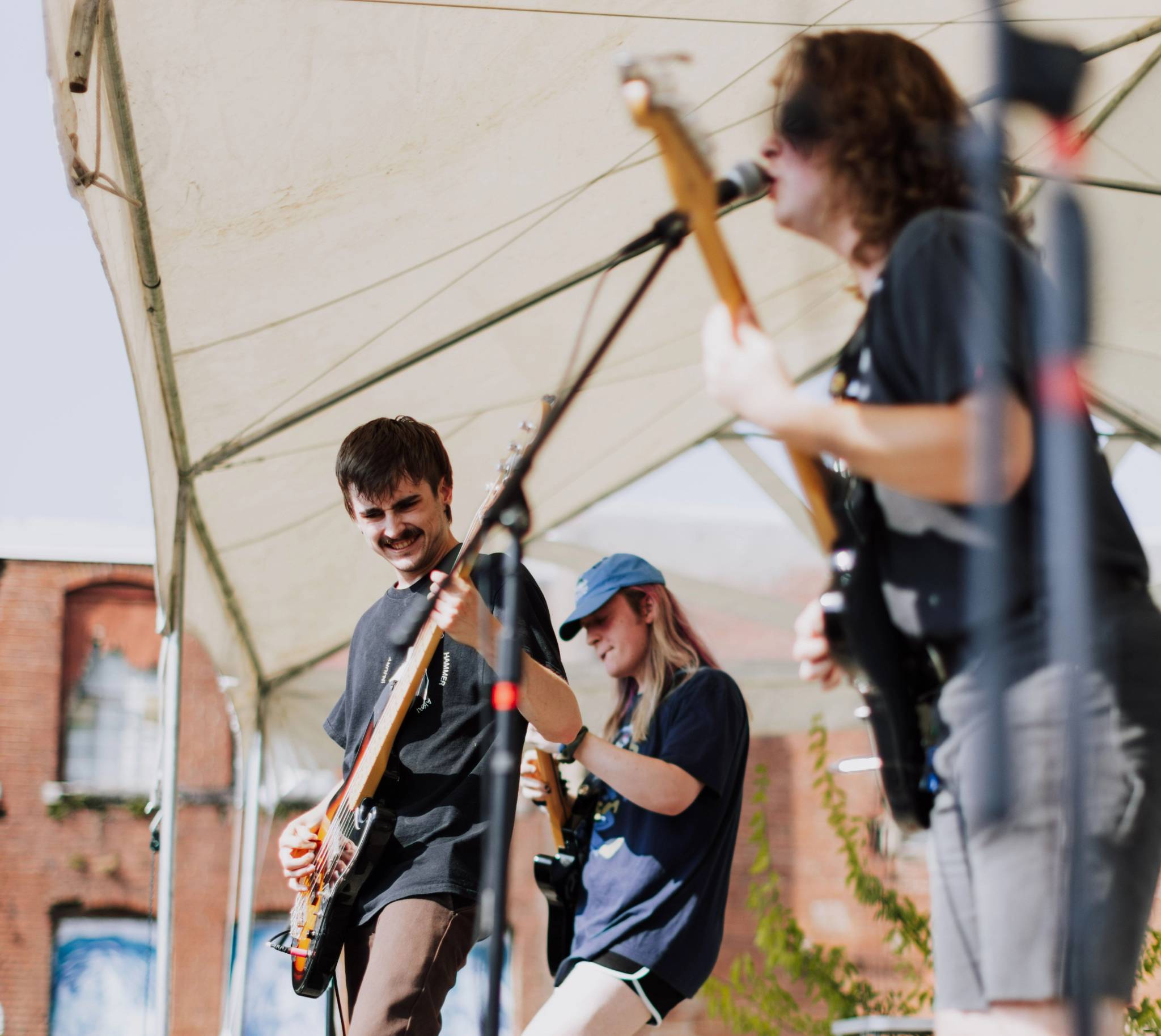
We store kit for London's events and entertainment businesses every week: band gear between gigs, AV equipment between hires, costumes and props between runs.
Whatever the job, the problem is the same. Equipment is valuable, bulky, and needs to be ready the moment the next booking lands. This guide covers how to sort that properly: what the work demands from a facility, how to organise a unit, and where HOLD fits in.

Get your kit out of storage limbo
What do event and entertainment businesses store?
Four camps, roughly.
- Bands and musicians store instruments, amps, PA systems and merch between gigs.
- Theatre and performing arts companies store costumes, props and staging between productions.
- AV and events suppliers store projectors, screens and lighting between hires.
- Production companies store set dressing and wardrobe between shoots.
The common thread: high-value kit, irregular hours, and no reason to rent commercial space for something that sits idle most of the week.
Warehouse, collection service, or self storage?
Most people start with a van and a spare room. The van isn't secure overnight and the spare room runs out once the costume rail takes over the hallway.
Beyond that, there are two real options:
- A warehouse means a lease and far more space than most events businesses use day to day.
- A collection service (where a company holds your kit and delivers it back on request) works if you're planning weeks ahead. It doesn't work if you finish a gig at midnight and need somewhere safe to drop the gear on the way home, or want to check a piece of kit with no notice.
Self storage is the third option: you hold the key, and you decide when.
What a working events kit needs
Events don't run nine to five. Late load-outs, early collections, heavy flight cases, and kit that can't sit in damp conditions between jobs. Most facilities cover one or two of these.
Events work needs all of them and that's where HOLD can help.
Why events companies use HOLD
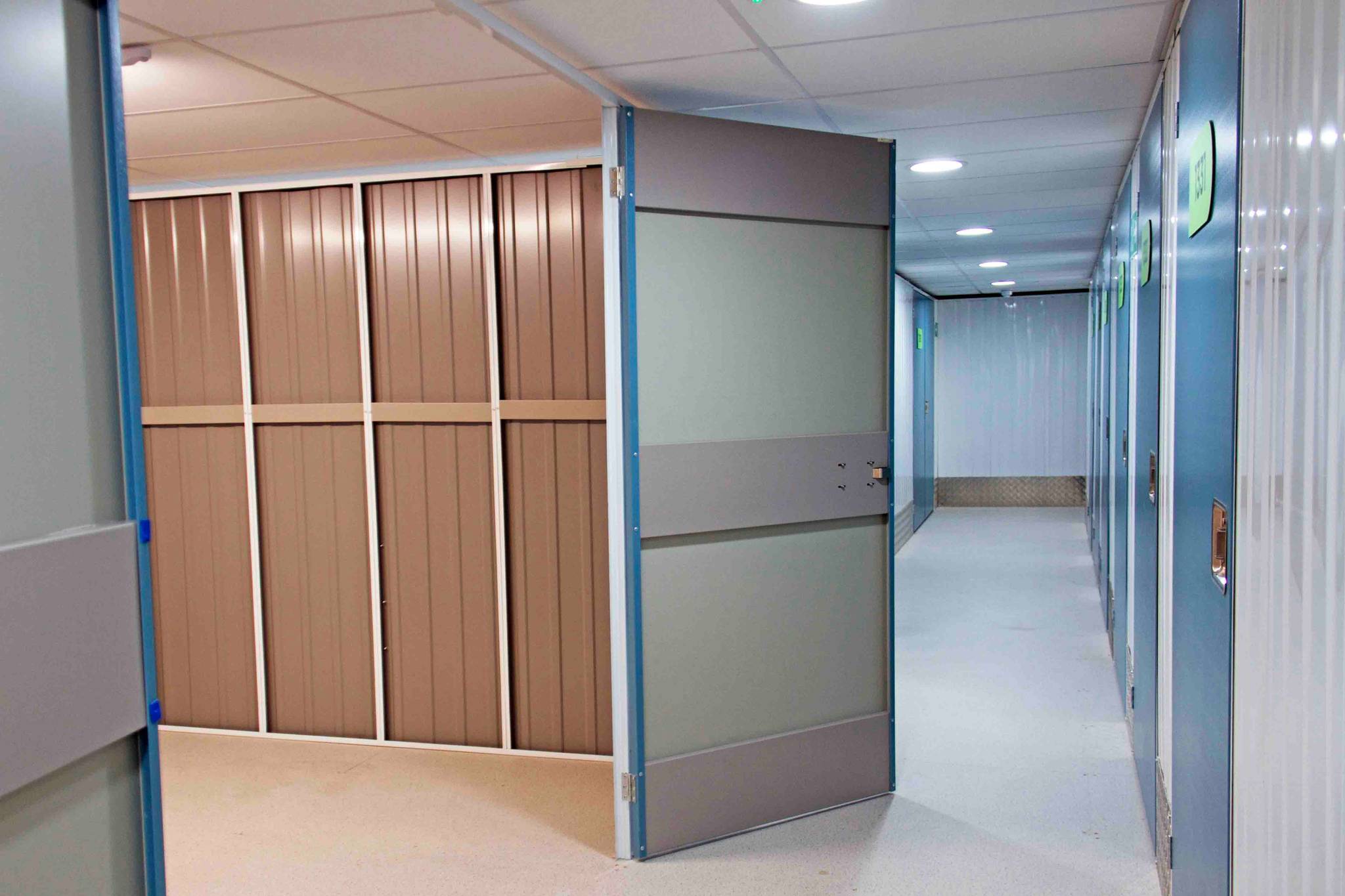
- 24-hour access storage, free on request
- Drive-up access, off-street parking and covered loading bays
- Ground floor units available for heavy kit
- Trolleys and pallet trucks on site
- Kings Cross facility outside the congestion charge zone
- No long-term lease, no business rates, units from 10 sq ft
Every unit is individually alarmed, with CCTV across the facility. Drop the gear back at midnight, collect it at six, and nobody's waiting on a booking window.
Setting up a unit for events work

Keep the heavy kit by the door
Staging, screens and flight cases load first and come back last. If they're at the front, you're not hauling them over everything else at load-in.

Group by job, not by item
If gear goes out in packages, a wedding rig, a festival set, a touring show, keep each package together. Loading becomes grab-and-go instead of rebuilding the kit list every time.

Store electronics and cables properly
Coil cables loosely rather than wrapping them tight around your arm, and store screens upright in their cases.

Hang costumes, don't fold them
Breathable garment bags, rails where possible, and acid-free tissue for delicate pieces. Folded stage wear creases in ways an iron won't fix an hour before curtain.
A base for the London circuit
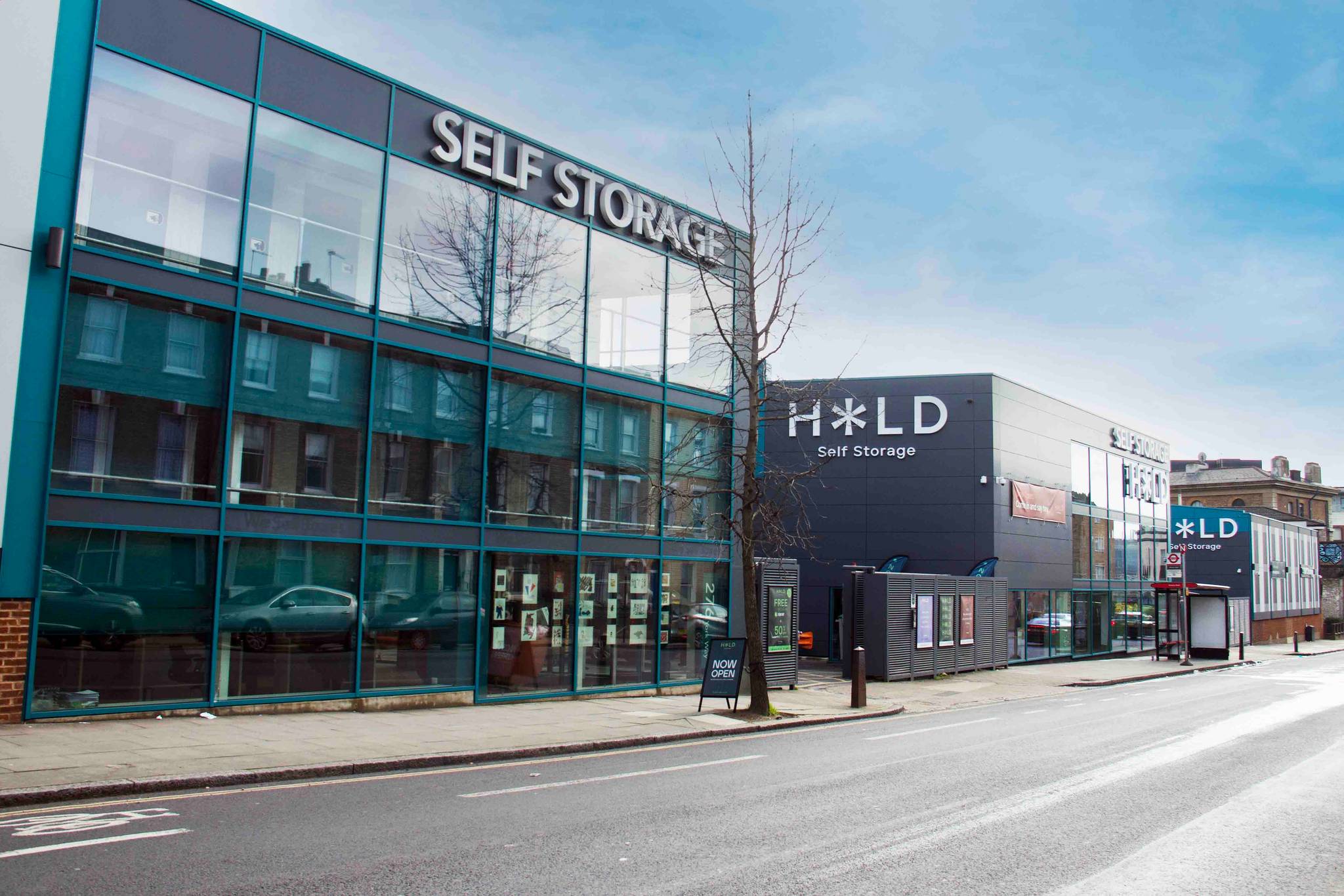
HOLD's Kings Cross facility sits well inside the working circuit. Camden, the Roundhouse and Coal Drops Yard are all a short drive away, and Kings Place, the music and arts venue on York Way, is a walk from the facility. No congestion charge on the way out, either.
And Kings Cross is just the start. HOLD facilities are opening soon in Chiswick, Croydon and Woodford, putting West, South and East London crews closer to a base of their own.
A base that grows with your business
AV2Hire: London's AV specialists, run from one unit
AV2Hire was founded by John Reynolds in 2006, starting with two projectors, two screens and a few microphones. It's now one of London's leading AV hire companies, supplying blue-chip clients and venues including ZSL London Zoo, with a delivery fleet that's 100% electric.
John runs the operation from a 300 sq ft unit at HOLD, storing 95% of the company's stock and using the space as a workshop to check and prep equipment between hires. Ground floor access makes moving large screens straightforward, and late-night returns after events are routine.
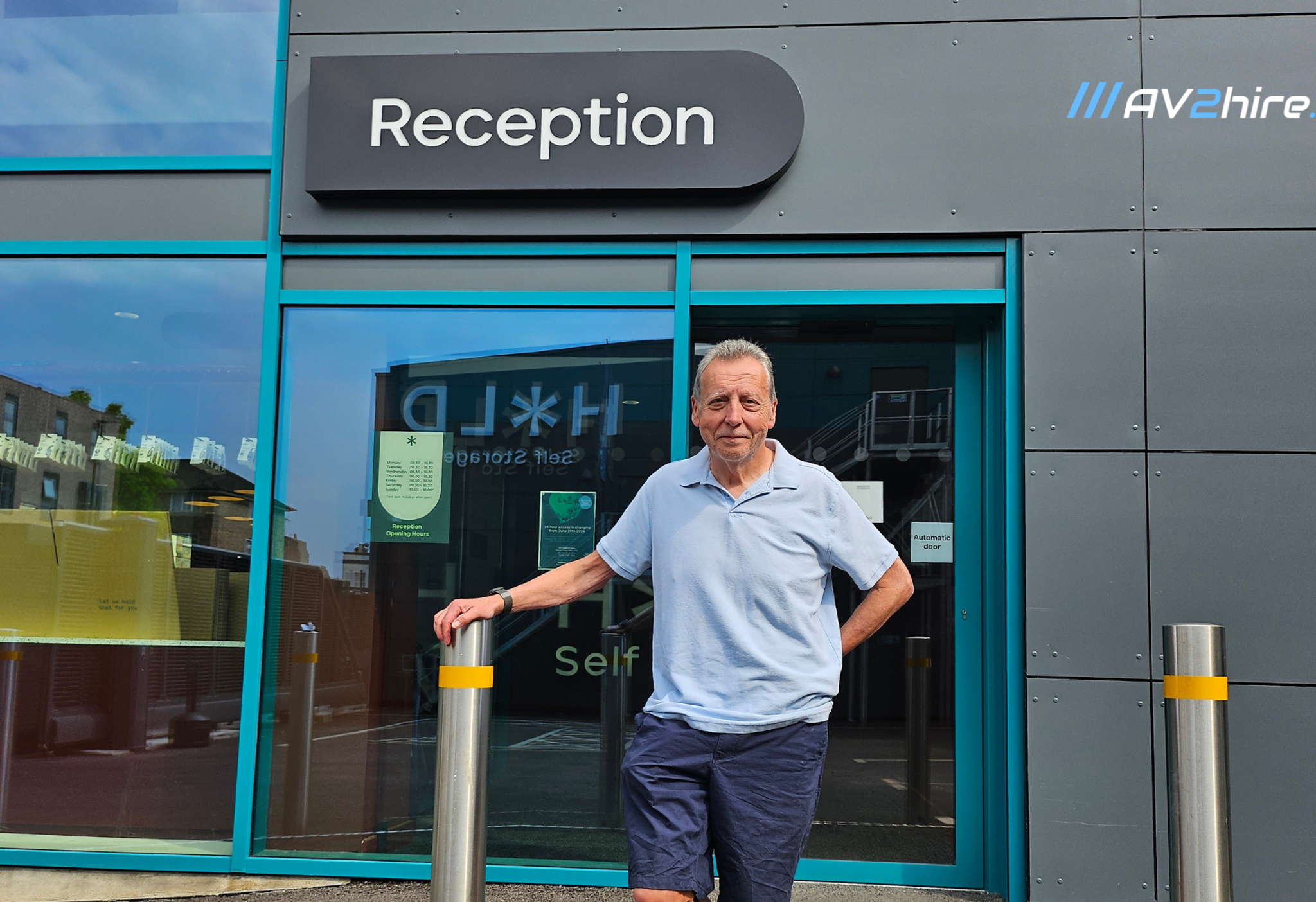
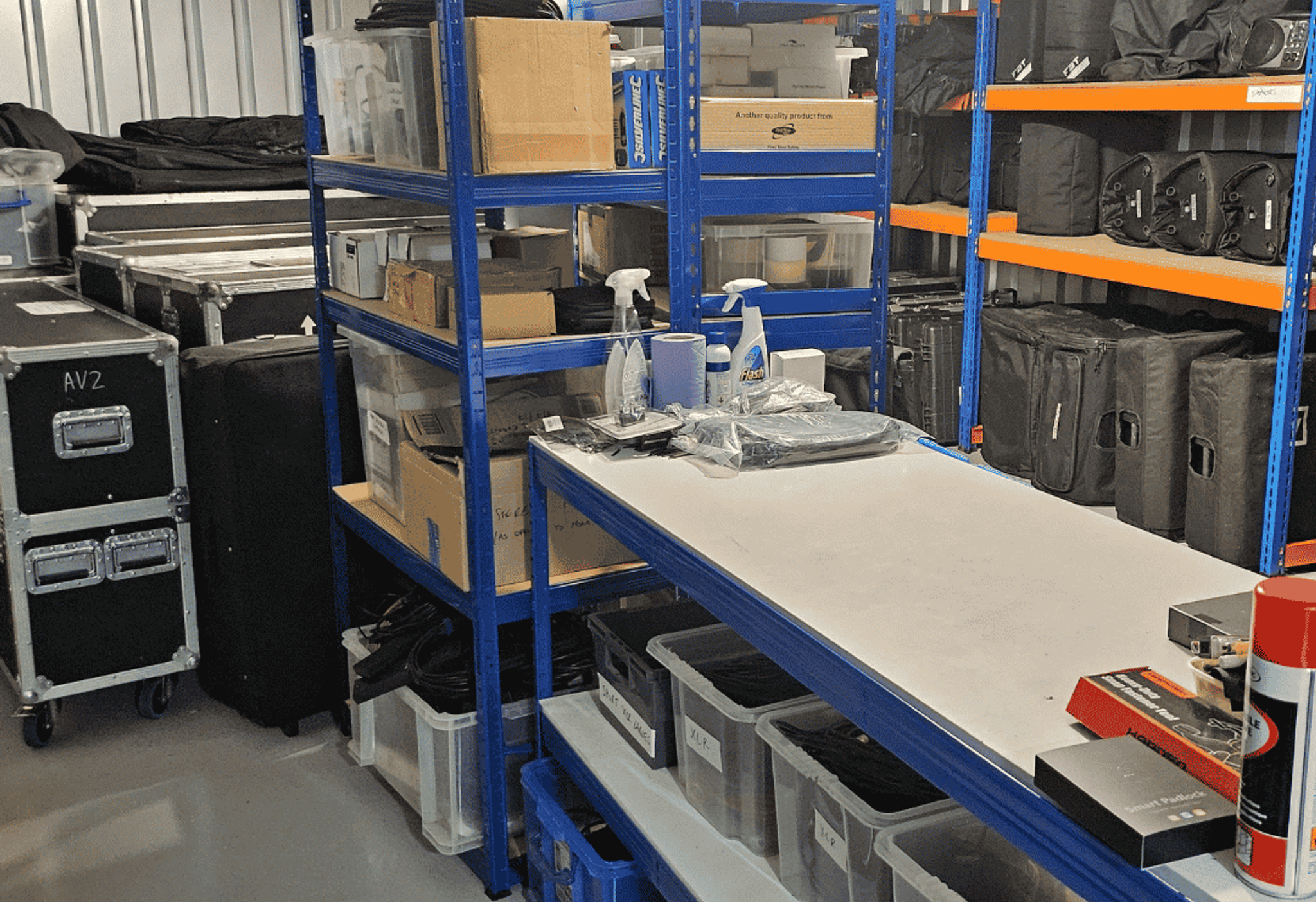
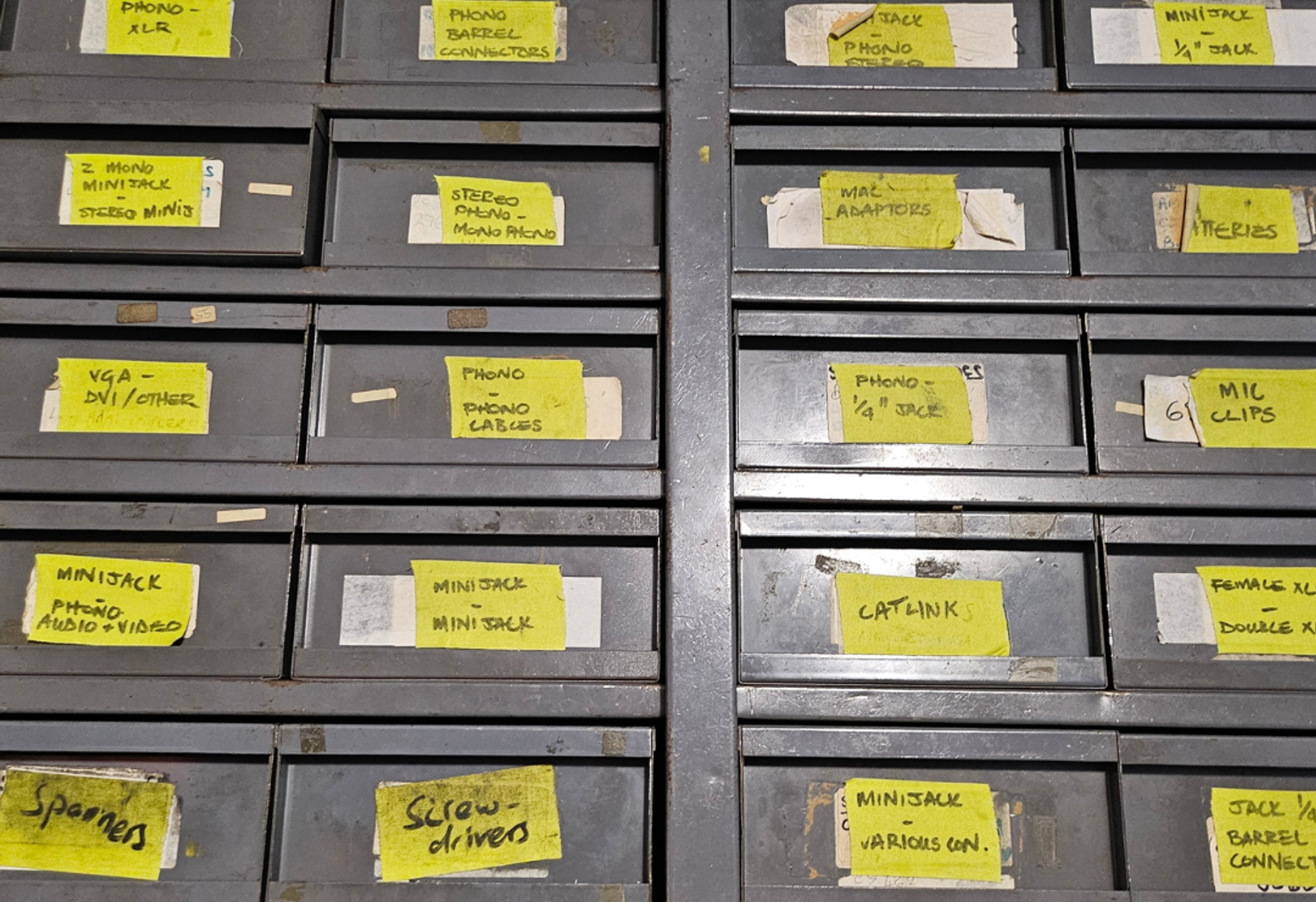
""One of the most important things about being here is that we've got access 24/7, which is essential for our late-night operations.""
John Reynolds, founder of AV2Hire
Flexible terms for an irregular diary
Events work comes in bursts. A big touring job might need double the space for a month, then almost none once it wraps. HOLD runs on monthly billing with no long-term lease, so a unit can grow for the busy stretch and shrink back once it's over.
Not sure what size that actually means for your kit? The storage unit size guide is the place to start, and HOLD's pricing guide covers what each size costs, along with how London compares to the rest of the UK.
faqs
No. Storage units are for storing equipment, not playing or performing in. HOLD's on-site workpods are suitable for checking, prepping and organising kit between jobs, not rehearsal. For rehearsal space near the facility, Kings Place on York Way is a short walk away.
Loosen string tension slightly on guitars and basses for long-term storage. Use hard-shell cases rather than gig bags, and keep instruments off the floor on shelving or pallets. HOLD's units are climate-secure, fireproof and waterproof, which covers the main environmental risks.
Clean everything first to remove sweat and stage makeup, use breathable garment bags rather than sealed plastic, hang where possible, and label by production and character. Keep fabric off the floor and away from direct contact with cardboard.
Yes. Units are accessed by PIN, which can be shared between band members or crew so different people can collect and return gear independently.
A lockout is acoustically treated space you can play in. A storage unit is for keeping kit secure between uses. Many musicians use both: storage as the secure base, a rehearsal room for practice. Self storage is typically cheaper per square foot and available in smaller sizes.
Yes, if the facility has the right infrastructure. At HOLD that means individually alarmed units, 24-hour CCTV, PIN-controlled entry and monitored alarms. AV2Hire stores 95% of its professional stock here and names security as a major factor in the choice.
It varies enormously. A solo musician might need 25 sq ft, a band with full backline more, and AV2Hire runs a full hire operation from 300 sq ft. The storage unit size guide is the practical starting point.
Yes. 24-hour access is free on request, activated the same day during reception hours. No booking, no advance request, no waiting for a delivery slot