
The gap between offices is where London office moves unravel. This guide covers timelines, costs, contents and continuity.
We store office contents for London businesses mid-move every week. The move day usually goes fine, but it's the gap between leases where things unravel.
When the old space is gone, the new one isn't quite ready, and the office contents need somewhere to go. That's where London office moves get complicated. This guide covers what that gap looks like in practice: the timelines, the real costs, and what to do with your office contents while you wait.

Get the planning right from the start
How long does an office move take?
It depends on the type of move, but it's almost always longer than businesses expect.
The physical move itself, getting everything from A to B, takes 1 to 5 days depending on office size. The full process (from deciding to move to being properly settled) is a different matter.
Most London office relocations take:
6 to 12 weeks: for a small team moving into a serviced office that's ready to use
3 to 6 months: for a medium-sized business taking on a leased space with some fit-out work
6 to 12 months+: for a larger business requiring a full Cat B fit-out or significant IT infrastructure changes
What we find surprises businesses most is connectivity. Standard FTTP broadband installation takes 1 to 2 weeks in most cases. A dedicated leased line (which many businesses need for reliable high-speed connectivity) typically takes 30 to 90 working days from order to activation.
What's more, complex central London buildings involving wayleaves, civil works, or heritage permissions can take longer still. Don't leave connectivity as an afterthought; commission it on day one of planning.
When should you start planning?
Short answer? Earlier than feels necessary.
If you've got a break clause or lease expiry coming up in the next 12 months, start now. The cost of starting late isn't usually the move itself; it's the rushed decisions on space, the IT delays, and the dilapidations negotiations you didn't have time to manage properly.
HOLD's practical rule of thumb
Work backwards from your target move date and add 30% to whatever timeline feels realistic. London office moves almost always take longer than planned, and the businesses that build that buffer in from the start have a noticeably smoother experience.
Most businesses leave this too late

You're moving to a smaller office
Since 2020, more London businesses have been right-sizing their office footprint than growing it. Downsizing almost always generates surplus: furniture that doesn't fit the smaller space, equipment no longer needed, and items the business hasn't decided what to do with yet.

You've outgrown your current space
The most common reason. The team has grown, the current space no longer fits, and it's time to find somewhere that does. It's also an opportunity: to redesign how the space works, pick a location that suits the team's commute, and start fresh with only the equipment and furniture you need.

Your office needs refurbishment
The office isn't moving, just everything in it. A refurbishment means clearing the space for fit-out works and bringing it all back once the dust settles. The typical window is 8 to 12 weeks, which fits neatly with a short-term flexible storage arrangement.
You're bringing the team back from remote working
Businesses that went remote between 2020 and 2022 and are now returning face a specific problem: equipment distributed across the team, kit that needs replacing, and an office that hasn't been touched in years. Getting everything back in one place takes more planning than most expect.
What to do with your office contents during the move
This is the question most businesses leave too late. When the lease ends and the keys go back, the furniture, equipment, and files all need somewhere to go.
There are three options, and for most businesses the answer is a combination of all three.
Sell
An office move is the best time to audit what the business actually needs. Furniture that won't fit the new space, equipment that's been superseded, and surplus office supplies can often be sold. Factor in 4 to 8 weeks of lead time if you want to sell rather than skip; that means starting the audit well before the move date.
Dispose
Items that can't be sold still need disposing of legally and responsibly. Electrical equipment requires WEEE-compliant disposal. Confidential documents need secure shredding. Budget for this; it adds up faster than most businesses expect.
Store
Interim storage is the practical answer for everything that has value but no immediate home: furniture awaiting a fit-out, equipment for a new office that isn't ready, archived documents, and anything the business hasn't decided on yet. The typical storage window for a London office move is 3 to 6 months.
One approach worth knowing about: storing items while you sell them at your own pace, rather than under the pressure of a move deadline. Your furniture sits safely in a unit while you list, show, and arrange collection, without any of it cluttering the new office.
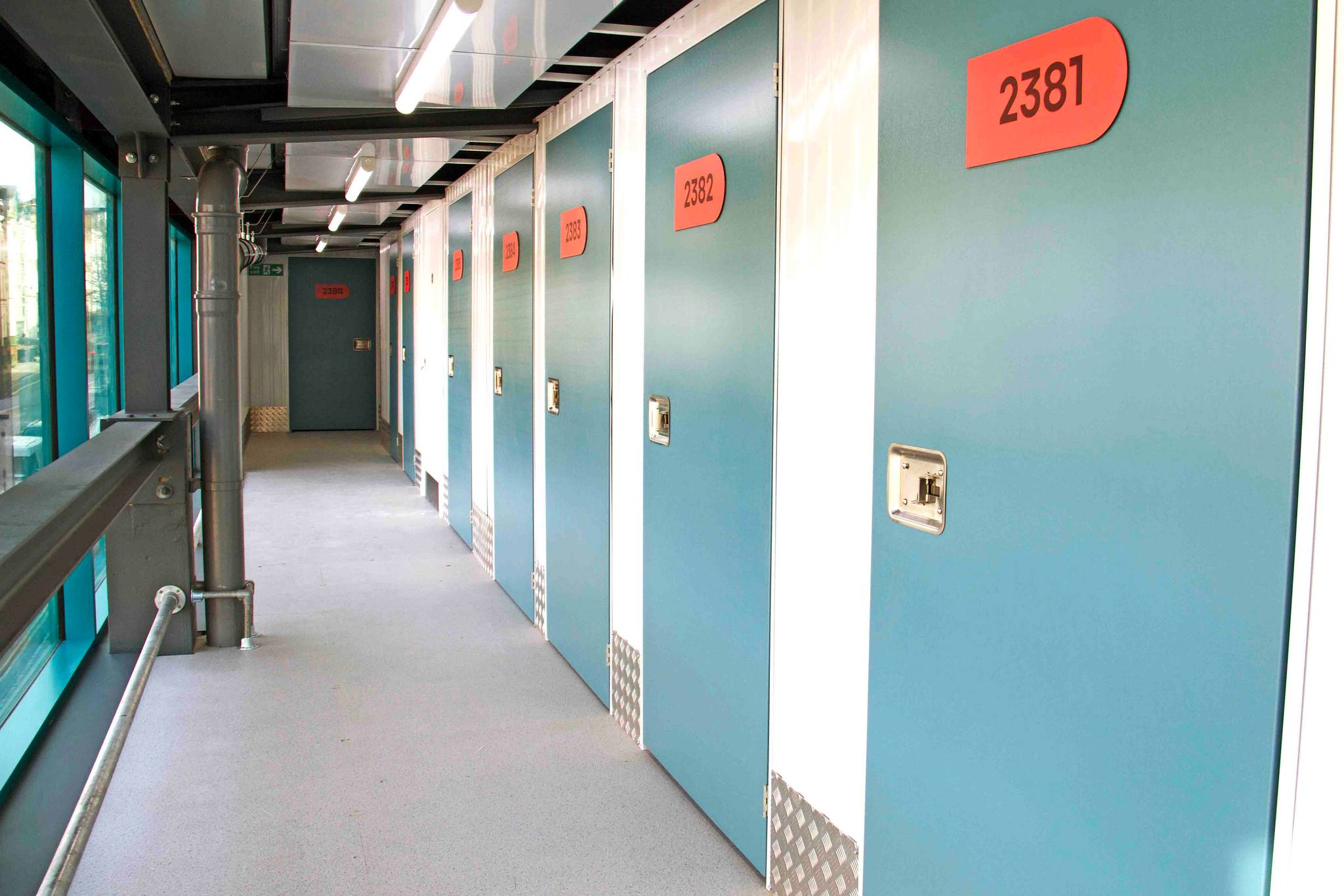
HOLD's office storage is used regularly by London businesses mid-move. Large units for office contents, flexible terms, no long-term lease, and no business rates. HOLD's Kings Cross facility sits outside the congestion charge zone, and Kings Cross St Pancras keeps the whole team connected from across the city.
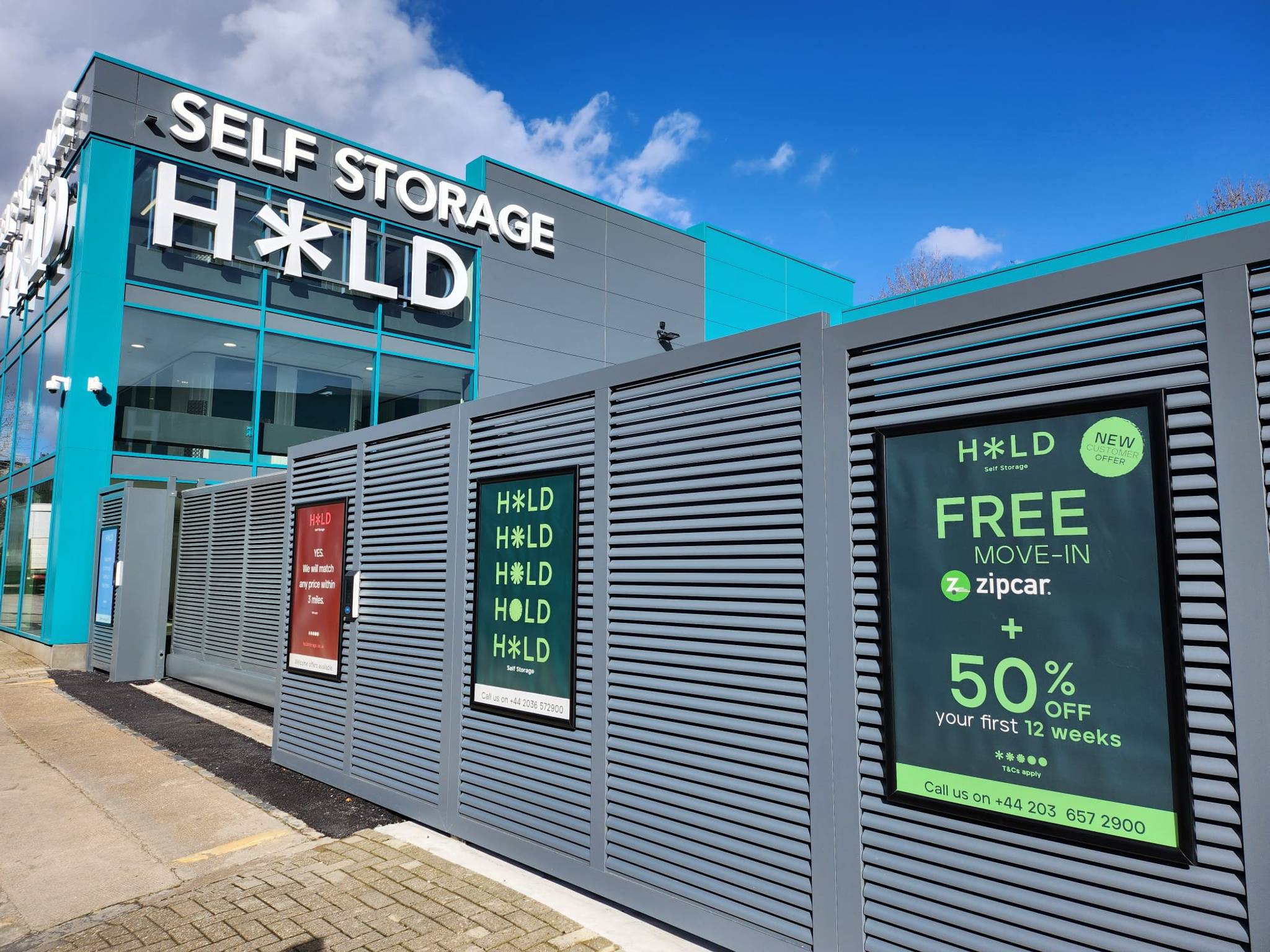
New customers pay £2 rent for their first month, a price match within 3 miles, and free Enterprise Car Club membership to help with the move-in.
How to keep your business running during the move



How much does it cost to move an office in London?
Office move costs vary more than almost any other business expense. As a rough guide, RAD Removals' 2026 costs for London office removals by size:
Office size | Estimated London removal cost |
|---|---|
Small to medium (up to 3,000 sq ft) | £3,500 to £7,000 |
Large (10,000 sq ft and above) | £6,100 to £23,000 |
These figures cover the physical removal only. The full cost of a London office move, once you factor in legal fees, IT setup, fit-out, furniture, and contingency, will be significantly higher.
The London costs most businesses don't budget for
- The Congestion Charge runs at £18 per vehicle per day from January 2026, and the ULEZ adds £12.50 per day for non-compliant vehicles. Both apply per vehicle per day, so a multi-day move with multiple vehicles adds up quickly.
- Parking bay suspensions are required in most central London boroughs for loading access and need to be booked well in advance; some boroughs require several weeks' notice and applications must be made through the local council.
- Dilapidations: your obligation to restore the old space to the condition your lease requires. For modern London offices this typically runs £15 to £25 per square foot, with premium central London spaces reaching £30 or more.
We recommend building 10 to 15% contingency into your total budget from the start. It won't go unused.
Need help finding a trusted London removal company for your office move? Check out our guide below.
How to announce your office move
Clear communication before, during, and after the move protects client relationships and keeps the team settled.
Before you move
- Notify clients and customers with as much notice as practical
- Update suppliers and delivery partners, set up a Royal Mail business redirection well before the move date (Royal Mail requires at least 5 working days' notice to process an application)
- Update your address at Companies House within 14 days of the change using form AD01
- Update HMRC separately since VAT, PAYE, and other tax registrations don't update automatically.
After the move
Update your company website, Google Business Profile, social media accounts, and email signatures. For key accounts, a personal call goes further than any automated email.
Common mistakes when moving office in London
Starting too late
A dedicated leased line takes 30 to 90 working days to install, and complex London buildings can take longer. Starting late means rushing every decision that follows.
Not auditing before you move
Moving clutter to a new office costs money and delays the moment the new space feels right. Clear out before you pack, not after.
Underestimating dilapidations
Many businesses don't budget for restoring the old space at all. Get a schedule of condition agreed and attached to your lease before you sign. It caps your reinstatement liability at the building's condition when you arrived.
Not planning for the gap
The period between leaving the old office and being fully settled in the new one is real and it needs a plan. Where do the contents go? What happens if the fit-out runs over? Businesses that plan for the gap have a far smoother transition than those that assume it won't happen to them.
Need storage during your office move?
- No business rates
- 24/7 PIN access, free on request
- Covered loading bays and off-street parking
- Outside the London congestion charge zone
- Delivery acceptance at reception
- Workpods, WiFi and meeting rooms on site
HOLD's office storage is built around the realities of a London move. Large units for office contents, in and out on your schedule.
faqs
For a small team moving into a serviced space, 6 to 12 weeks is workable. For anything involving a leased space with fit-out works, start at least 6 months out. If you need a dedicated leased line, order it the moment you sign the new lease; installation typically takes 30 to 90 working days, and complex London buildings can take longer.
Most businesses sell what they can, dispose of what they can't, and store the rest. The typical interim storage window for office contents is 3 to 6 months. HOLD's office storage units are used regularly for exactly this, with flexible terms and no long-term commitment required.
It doesn't have to be. The businesses that find it stressful are almost always the ones that started late or didn't plan for the gap between offices. Appoint a move coordinator early, give IT its own workstream, and have a clear plan for your office contents before the move date.
It's more common than most businesses expect. The old lease ends, the keys go back, and the new space still isn't ready. The practical answer is interim storage for your contents and somewhere to keep working while the fit-out finishes. Most London office moves generate a gap of a few weeks to a few months. HOLD business storage gives you the space for your contents and on-site workpods and meeting rooms to keep the business running while you wait.
Send a formal email from a senior contact, including the new address, move date, and a clear statement that service continues without interruption. Update your website, Google Business Profile, and email signatures on move day. For key accounts, a personal call before the announcement goes further than any email.
Further reading and useful resources
Statutory and regulatory
Change your registered office address (AD01) GOV.UK
Tell HMRC about a change to your business GOV.UK
WEEE regulations for electrical equipment disposal GOV.UK
Data security guidance for organisations ICO
Business mail redirection Royal Mail
Transport and logistics
Congestion Charge TfL
Ultra Low Emission Zone TfL
Professional guidance
Dilapidations guide for commercial tenants RICS
10 sq m per person workplace benchmark British Council for Offices