

Key takeaways
Start your office relocation planning 3 to 6 months before moving day
Appoint a dedicated move manager to own every stage of the process
Set aside 10 to 15% of your budget for hidden costs and contingencies
Back up all IT systems before the move and test everything at the new location
We support multiple London businesses who are mid-move, and need a reliable storage solution while they transition between offices. The one thing we hear consistently: the businesses that had a plan from the start moved faster, spent less, and kept their teams calmer.
This moving office checklist covers every phase of a successful office relocation so your team knows exactly what to do and when.
Download our free office move checklist using the button below.
Why a detailed office relocation checklist matters
A lot can go wrong during an office move. IT systems go offline, equipment gets lost in transit, and employees turn up on moving day without clear instructions.
A detailed moving plan removes the guesswork. It assigns ownership, surfaces dependencies early, and gives your relocation team a single source of truth throughout the entire moving process.
Businesses that treat the relocation process as a proper project, with key milestones, assigned roles, and a realistic timeline, minimise downtime and avoid unnecessary costs at every stage.
Phase 1: Early planning (3 to 6 months out)

This is the phase most businesses underinvest in. Starting early gives you the leverage to negotiate better terms, hire professional movers before their diaries fill, and avoid last-minute decisions that cost more than they should.
Appoint a move manager and relocation team
Assign a project manager to own the office relocation from start to finish. This person tracks progress, resolves blockers, and keeps the dedicated team aligned across every workstream.
Depending on your business size, the team might include your operations lead, IT manager, HR contact, and office manager. Get everyone's responsibilities documented before anything else moves forward.
Review your current office lease
Read your current lease carefully before you do anything else. Many businesses overlook obligations around repairs, cleaning, and reinstatement that can generate significant unexpected costs at handover.
Note your break clause dates, notice periods, and any dilapidations clauses. If anything looks ambiguous, get legal advice early.
Set your budget
Office relocation costs almost always exceed initial estimates. Beyond the removal firm, plan for every cost category upfront to save money later:
Cost category | What to include |
|---|---|
New premises | Security deposit, office lease deposit |
Removals | Professional movers, insurance for goods in transit |
Secure units for furniture, equipment, and archived documents during the transition | |
IT setup | Cabling, internet, phone lines, system testing |
Fit-out | New furniture, interior design fees, signage |
Office supplies | Stationery, packing supplies, labelling materials |
Contingency | 10 to 15% of total budget for unforeseen expenses |
Budgeting should start as soon as you commit to moving, ideally 3 to 6 months before moving day. Hidden costs like temporary storage solutions, new furniture, and telephone line setup have a habit of appearing late in the process if you haven't planned for them.
Conduct a needs assessment
Before committing to a new space, assess what your business actually needs from it. Think about meeting rooms, storage solutions for documents and equipment, and how much collaborative space your teams require.
Consider future growth too. A new workspace that fits your team today might feel cramped in 18 months if you're hiring.
Phase 2: Securing and planning your new office space (2 to 3 months out)

How much space does your business actually need?
Getting the space calculation right is one of the most important decisions in the entire office relocation. Too little space creates friction from day one; too much means you're paying for square footage your team doesn't use.
The British Council for Offices recommends 10 square metres per person as the standard benchmark for UK workplaces, with 10 to 12 sq m per person once circulation space is included. Your actual figure depends on how much collaborative space, how many meeting rooms, and how much dedicated storage you need. Make sure you factor in planned headcount growth over the next 12 to 24 months before signing anything.
The London property market moves fast
Grade A office space in central London moves fast, particularly in areas like King's Cross, Shoreditch, Farringdon, and Victoria. If you identify a new office space you want, don't assume it'll still be available while you complete your needs assessment. Have your requirements documented and your decision-makers aligned before you start viewing.
Evaluate your new office space
Once you've identified a shortlist of options, assess each new office space against your needs assessment findings in detail. Check that the office space works for your team in terms of commute, building access, and day-to-day amenities, and confirm there's adequate loading access for moving day.
Pay particular attention to the layout of each option. A floor plan that flows well for your team's working patterns will make the entire process of settling in far smoother than one you're constantly working around.
Create a detailed floor plan
Creating a detailed floor plan is one of the most valuable steps in the entire process. It tells your moving team exactly where every piece of office furniture and office equipment goes, which eliminates confusion on moving day and saves hours of rearranging afterwards.
Map out employee workstations, meeting rooms, storage areas, and any specialist equipment positions on your new floor plan. Share it with your professional movers, IT team, and office manager well before the move.
Hire an experienced team of professional movers
Hire professional movers experienced in commercial relocations in London as early as possible. Their diaries fill quickly and leaving this too late limits your options significantly.
Confirm that their insurance covers public liability, goods in transit, and fragile or specialist IT equipment. Confirm their fleet is ULEZ-compliant too; non-compliant vehicles will add £12.50 per vehicle per day to your costs. Get at least 3 quotes and check references from other London business relocations specifically, since commercial moves in the capital have demands that don't apply elsewhere.
ULEZ and the Congestion Charge
Transport for London's Ultra Low Emission Zone covers all London boroughs and charges £12.50 per day for non-compliant vehicles. On top of that, the London Congestion Charge runs at £18 per day for vehicles entering central London. ]Both charges apply per vehicle per day, so a multi-day move with multiple vehicles can add a meaningful sum to your removal costs.
Always confirm your movers' fleet is ULEZ-compliant and factor both charges into your moving budget.
Phase 3: Operational planning (6 to 8 weeks out)

Audit your current assets
Conduct a full stock check to know exactly what's being moved, what's being discarded, and what might need replacing. This is a good moment to audit current assets and remove anything your business no longer needs.
Don't move clutter to a new office. Use the relocation as an opportunity to streamline your equipment, office supplies, and document archives before the moving process begins in earnest.
Establish a labelling system
Create a standardised labelling system for every box, item of office furniture, and piece of IT equipment. Each label should reference the item's destination on your floor plan so movers can place everything correctly without asking.
Make sure employees also label their personal belongings clearly, especially anything kept at desks or in shared storage areas. A clear labelling system is one of the simplest things you can do to protect against placement chaos on moving day.
IT equipment: plan your technology move
Your IT team needs its own dedicated workstream within the broader relocation plan. The main priorities are:
- Back up all servers and files before the move
- Confirm internet and phone line installation dates at the new office
- Plan the disconnection sequence at the old office
- Schedule reconnection and testing at the new location before staff arrive
- Confirm telephone lines and any specialist tech equipment requirements with your provider
Under UK GDPR, organisations must protect personal data throughout any change to their physical premises, including ensuring retired equipment is securely wiped before disposal. The ICO's data security guidance covers the technical and organisational measures required and is worth reviewing before the move.
Minimal downtime for your IT systems should be a non-negotiable goal. Every hour your systems are offline has a direct cost to your business operations, so treat IT equipment as the highest-priority workstream in your moving office checklist.
Storage solutions for the transition period

Most office relocations generate a temporary surplus: furniture that doesn't fit the new space yet, archived documents, equipment that's still in use but not needed on day one. Having a clear plan for where these items go prevents your new office from becoming cluttered before you've even settled in.
HOLD's business storage units give London businesses a practical base during the transition. Scalable units, 24/7 PIN access (free, on request), off-street parking, covered loading bays, and no long-term lease commitment.
The facility sits outside the London congestion charge zone, which keeps drop-off and pick-up costs predictable throughout your relocation.
Phase 4: Stakeholder communication

Notify key stakeholders well in advance
Make sure every important contact receives your new office address and moving date before you move:
- Clients and customers: Send an official notice confirming your new location and reassuring them of service continuity
- Suppliers: Update delivery addresses and all logistics contact details
- Companies House: You must notify Companies House within 14 days of the change; you can update your registered address online using form AD01
- HMRC: Update your business address separately via your Government Gateway business account, since Companies House notifying HMRC of the registered office change doesn't automatically update all your tax registrations
- Banks and insurers: Update your new office address on every financial account
- Royal Mail: Set up a business mail redirection from your old office as early as possible. Royal Mail requires at least 5 working days' notice, so apply 3 weeks before moving day to be safe
Use multiple channels to notify stakeholders. An email announcement, updates across your social media accounts, and a refreshed contact page on your company website together ensure nothing slips through.
Create an employee communication plan
Regular updates keep morale high and reduce employee concerns during what can be an unsettling period for a team. Share the following as early as you can:
- Moving dates and the reason for the change
- The new office location and nearest transport links
- New journey planner routes for the commute
- Cycle storage availability at the new office
- Nearby parking options
Create a dedicated channel where employees can ask questions and get timely answers. Gathering employee feedback after the move helps you understand what worked well and what you'd handle differently next time.
Phase 5: Moving day

Brief your relocation team the day before
Hold a final briefing with your relocation team the day before the move. Confirm roles, share the moving schedule, and distribute emergency contact numbers for every key person involved in the move.
Your project manager should be on-site for the entire moving day to supervise the move, provide guidance for professional movers, and handle anything unexpected as it comes up.
Loading access and building restrictions
Many central London office buildings have no dedicated loading bay, narrow service lifts, and tightly controlled delivery windows. Where a removal vehicle needs to park on a public road, the local borough requires a parking bay suspension booked in advance.
Camden, Islington, Southwark, and the City of London all operate controlled parking zones with their own permit processes. Camden requires 14 calendar days plus 3 working days processing time, so apply as soon as your move date is confirmed.
Book parking space permits and loading access
If your new office location is in a controlled parking zone, confirm your parking space permits and loading bay bookings well in advance. London boroughs including (Camden, Islington, Westminster, Southwark, and the City of London) all have their own permit processes. Camden requires 14 calendar days plus 3 working days processing time, so apply as soon as your move date is confirmed.
Confirm access at both your old and new offices. Professional movers need safe, legal access to load and unload without delays, and a straightforward loading situation saves significant time and money on the day.
If you're storing items at HOLD's King's Cross storage facility during the move, it sits outside the London congestion charge zone with off-street parking and covered loading bays on site, removing one logistical headache entirely.
Use your floor plan on the day
On moving day, your new floor plan is your single most important document. Station a team member at the new office entrance to direct movers using it in real time.
Follow your floor plan for desk and equipment setup and resist the urge to improvise. Changing the layout on the fly causes delays and usually means rearranging things again the following week.
Conduct a final inspection of the old office
Before handing back the keys, conduct a thorough inspection of the old office. Check every room, cupboard, and storage area to make sure nothing is left behind, including any personal belongings employees may have stored away from their desks.
Review your lease obligations regarding cleaning and repairs, document the condition of the space with photographs, and keep records of everything for your files.
Phase 6: Settling into your new office

Test IT systems before the team arrives
Test all IT systems at the new location before your team officially starts working there. Run through:
- Internet connectivity on all connections
- Phone lines and extensions
- Servers and file access
- Any specialist tech equipment
- Video conferencing in meeting rooms
If anything isn't working, you want to know before 9am on day one, not during your first client call.
Update your new address everywhere
Updating your new office address is surprisingly time-consuming if you don't approach it systematically. Work through this list:
- Company website (footer, contact page, Google Business Profile)
- Social media accounts
- Email signatures across the whole team
- Google Maps and other directory listings
- Stationery and branded materials
- Any printed marketing materials referencing your old address
- Companies House and HMRC updated separately, since they're different systems
Notifying clients about the new premises and reassuring them of service continuity should come from a senior person in the business, not just an automated email.
Conduct a final inventory and plan the office warming party
Conduct a final inventory to confirm all items arrived safely. Cross-reference it against your pre-move stock check and flag anything missing with your movers straight away.
Once the dust settles, an office warming party is a great way to bring the team together and mark the start of a new chapter. It signals to employees that the relocation is complete, helps everyone feel settled in the new workspace, and gives people a chance to explore the space together in a relaxed setting.
How to make your office move a success
A successful office move comes down to treating it as a proper project from the start. The businesses that move most smoothly are the ones that budget properly, resource adequately, and follow the plan through every phase rather than improvising when things get complicated.
Start planning early, build contingency into everything, and don't underestimate the value of professional support for the high-stakes parts of the move, especially IT and removals.
How HOLD supports office relocation
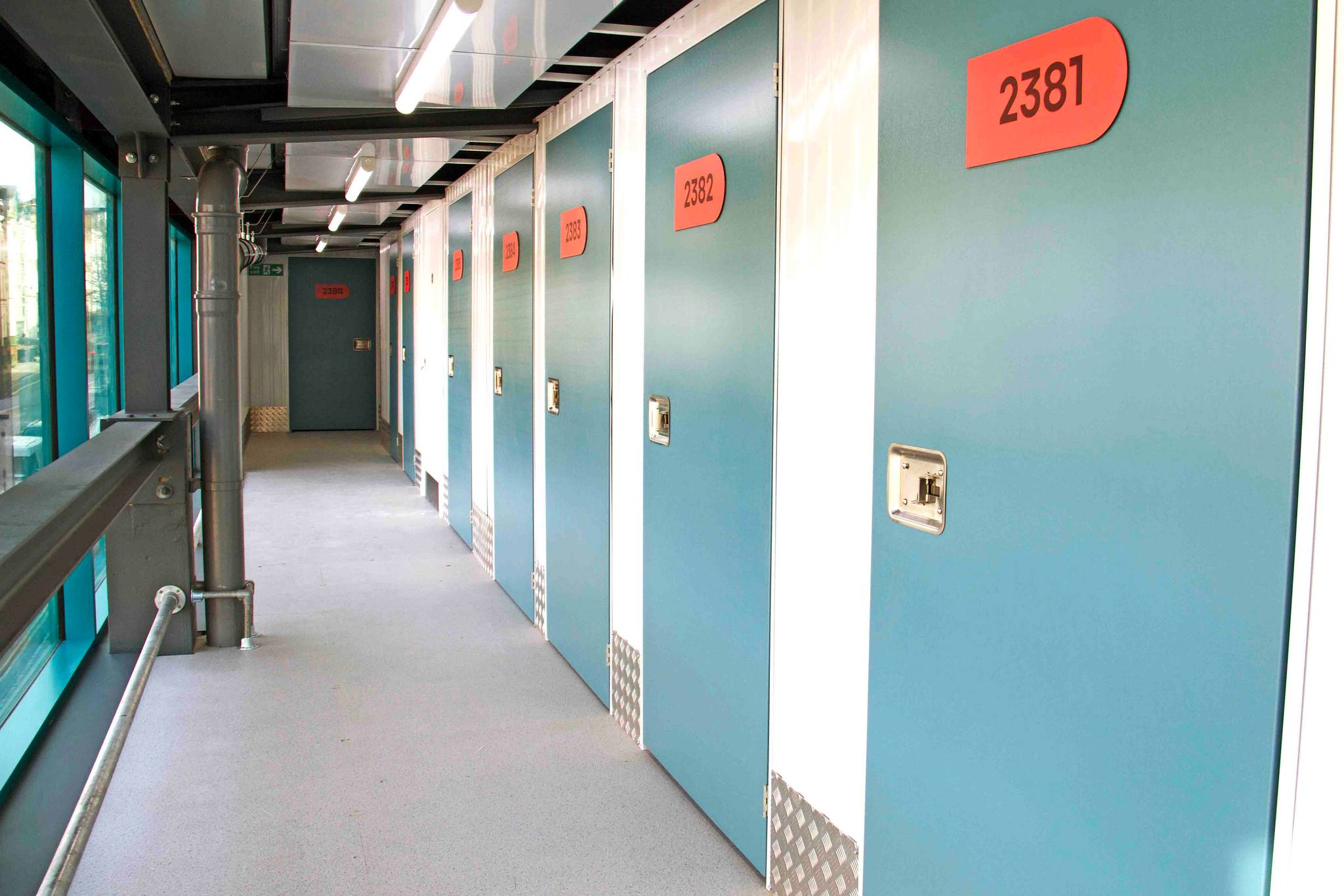
If your move is generating surplus furniture, archived documents, or equipment that won't fit straight into the new office space, HOLD's business storage units in London give you a flexible, central London base during the transition.
You get scalable units with free 24/7 PIN access on request, on-site workpods and WiFi, covered loading bays, off-street parking outside the congestion charge zone, and no long-term lease commitment. New customers get 50% off for the first 8 weeks and a free Enterprise van hire, which takes one more logistical task off your plate on moving day.
Get a quote online in 30 seconds and see how HOLD can take the pressure off your relocation.
Start planning your office move 3 to 6 months in advance. This gives you enough time to review your current lease, hire professional movers, build a detailed relocation timeline, and notify key stakeholders without rushing any decisions.
A complete office relocation checklist should cover lease review, budget-setting, a needs assessment, a new floor plan, IT backup and testing, a labelling system, stakeholder communications, and a post-move inventory. Each phase needs assigned owners and clear deadlines tied to key milestones.
Plan your IT equipment to move as a separate workstream with its own timeline. Back up all servers before the move, confirm installation dates at the new office well in advance, and test every system before your team arrives on day one. Minimal downtime is achievable with the right preparation.
Hidden costs in a London office relocation typically include interior design fees, new furniture, telephone line installation, security deposits, packing supplies, office supplies, and temporary storage solutions. For London moves specifically, also budget for ULEZ charges (£12.50 per vehicle per day for non-compliant vehicles), the Congestion Charge (£18 per vehicle per day in central London), and parking bay suspension fees for loading access. Allocate 10 to 15% of your total budget as a contingency from the start.
Send a formal email announcement and update your company website, social media accounts, and Google Business Profile. Update your contact details at Companies House and with HMRC separately, and set up a Royal Mail business redirection before you move. A follow-up from a senior contact helps reassure clients of continuity.
Yes. HOLD's business storage units are used regularly by London businesses in transition. You can store office furniture, archived documents, and surplus equipment in a secure, flexible unit while your new office gets fully set up, with free 24/7 PIN access on request and no long-term lease required.