

Key takeaways
Business rates apply if storage is used commercially
The Valuation Office Agency (VOA) decides if a unit is non-domestic
Small Business Rate Relief can reduce rates
Check with your local council for reliefs and exemptions
Get professional advice to manage costs and avoid surprises
When exploring storage solutions, it's crucial to understand the potential for incurring business rates on storage units. If you don't research storage facilities carefully and the current regulations, you may be landed with a surprise bill.
Let's make sure that doesn't happen.
HOLD offers tailored business storage in King’s Cross with modern 24/7 units, flexible upsizing and downsizing; and we'll handle business rates payments.
What are business rates?
Business rates are a local tax that applies to most non-domestic or business properties in the UK, such as shops, offices, and warehouses. This tax is an important part of the local economy, funding essential services like public transport, street lighting, and emergency services.
Managed by local councils, business rates are calculated based on the property's "rateable value," which the Valuation Office Agency determines. This system ensures that businesses contribute to the local amenities and services that support their operation and the wider community.
Understanding self storage business rates
Unlike domestic storage users, those using units for business purposes can be liable for higher costs. This determination largely depends on how the storage unit is used.
If a unit is used for commercial activities (such as storing stock for an online business or as a base for operations) it may be classified as a non-domestic property. This also applies to any use that goes beyond simple personal storage.
Some practical questions that may indicate whether a self storage unit could be treated as business premises for rating purposes include:
- Is it used for commercial purposes? Is the unit being used to store goods, materials, furniture storage, or equipment for a business?
- What's the frequency of access? How often is the unit accessed for business operations? Regular access for business activities could classify it as a business premise.
- Is it modified for business use? Have any modifications been made to the unit to facilitate business operations, such as shelving for stock or an office space setup?
- Is it a business operations base? Is the unit being used as a base for business operations, for example, as a distribution point, or to conduct sales or services?
- Is it an integral part of a business? Is the storage unit an essential component of the business operations? This could mean it's used for storing inventory, archives packing materials, or equipment without which the business cannot operate.
The Valuation Office Agency (VOA) plays a critical role in this determination, assessing properties to decide if they should be listed on the rating list as business premises.
Exemptions and reliefs
In the UK, certain self storage facilities and units may not be subject to business rates or could be eligible for reduced rates under specific conditions and relief schemes:
Small Business Rate Relief (SBRR)
In England, if your self storage unit has a rateable value of £15,000 or less, and it's the only property your business uses, you might qualify for SBRR. Properties with a rateable value of £12,000 or less are exempt from business rates.
Different thresholds and relief schemes apply in Scotland, Wales and Northern Ireland, so always check the rules where your unit is located.
For properties valued between £12,001 and £15,000, relief decreases gradually from 100% to 0%. If you acquire a second property, you can retain relief on your main property for 12 months, under certain conditions.
When are properties exempt from business rates?
Some properties are completely exempt, including:
- Agricultural land and buildings (as long as they’re not used for non-agricultural purposes)
- Properties used for the training or welfare of disabled people
- Buildings registered for public religious worship or as church halls
For these exemptions, the actual use of the property and meeting the legal criteria is what matters.
How business rates relief works across the UK
Business rates relief varies by nation:
- Scotland, Wales and Northern Ireland each run their own schemes
- Local councils decide who qualifies, and handle billing and collection
The safest option is to contact your local council to see which reliefs apply in your area and whether you’re eligible.
How to check if your storage unit is liable for business rates
To find out whether your storage unit is subject to business rates in the UK, follow these steps
1. Check the use of your self storage unit
Assess how you're using the storage unit. If it's for commercial activities, like storing inventory or equipment for your business, it might be subject to business rates.
2. Consult the Valuation Office Agency (VOA)
The VOA assigns a rateable value to non-domestic properties, including storage units used for business. You can contact the VOA to find out if your storage unit has been assessed for business rates. Their website offers resources and contact details.
3. Contact your local council
Local councils issue business rates bills and handle collections. They can provide specific advice on whether your storage unit is liable for business rates and inform you about any relief schemes you might qualify for. As rates can vary by location, your local council is a crucial resource.
4. Review relief schemes
Before contacting the VOA or your local council, familiarise yourself with various business rates relief schemes on the GOV.UK website. This can help you ask more precise questions.
5. Seek professional advice
If you're unsure about the rateable value of your self storage unit or its liability for business rates, consulting a professional, such as a tax advisor or a solicitor specialising in property law, can offer clarity. They can provide detailed assessments and assist with appeals if needed.
Are container and box storage units liable for business rates?

Container storage and box storage units may be liable for business rates. However, who actually pays normally depends on who is in ‘rateable occupation’ of the land or site, not just who owns or rents the container.
In many self storage or hire-yard setups, the site or storage operator is the ratepayer and business rates are built into what you pay for the unit. If you place containers on land you occupy for your own business, you or your business may be the one liable.
Because this is very fact-specific, it’s best to check your position with the Valuation Office Agency (VOA) or your local council.
How to manage business storage costs

Understand your liability
First, be clear on how you’re using your storage unit. If it’s part of your day-to-day business activities (for example, storing stock, equipment or materials), then business rates may be in play, and it’s worth checking your position.
Explore business storage solutions
Secure storage facilities like HOLD offer solutions tailored exclusively for businesses. This can be a cost-effective and secure alternative to traditional business storage.
HOLD emphasises security and flexibility over average storage costs, offering modern storage units at its King’s Cross facility in London, with new sites in Chiswick and Croydon coming soon. We also have systems in place to accept deliveries on your behalf, which can save time and ensure that your business operations run smoothly.
Optimise your self storage use
Consider how you can use your storage space more efficiently. Reducing the size of your self storage unit or renegotiating terms with your storage provider can lead to direct savings on total storage costs.
In summary
Business rates on storage units don’t have to be confusing. If you understand how they’re calculated, check what reliefs apply, and get advice when you need it, you can avoid surprise bills and keep storage costs aligned with how your business actually operates.
HOLD: premier self storage in London
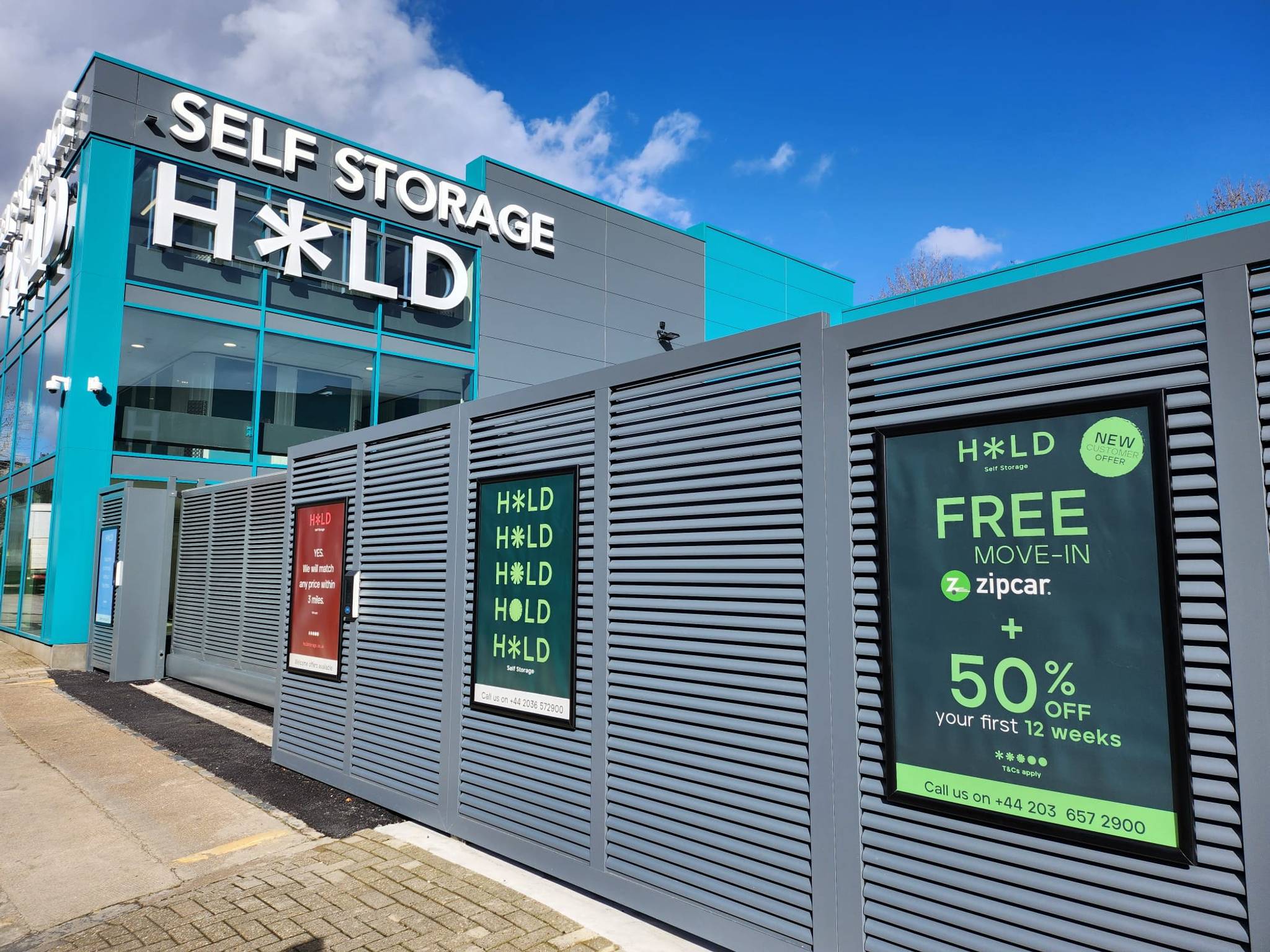
Unlike most storage facilities, HOLD puts your needs first. Based in the heart of London, we're a new-generation storage company that can serve your every need.
We offer a wide range of 24/7 access storage units with no fixed contracts. Whether you're moving house, need a place to secure garden furniture or personal belongings, or somewhere to keep your business stock, we have you covered.
Get a price match and 50% off for the first 8 weeks.
Frequently Asked Questions
If you rent one of our business storage units, you don’t have to cover the business rates on that space. Instead, HOLD will handle these payments.
If you occupy a unit as a base for your operations (for example, staff working there regularly, customers visiting, or it functioning as your main workshop or office), your local council or the VOA may treat it as non-domestic premises you occupy, making you liable for business rates rather than just storage fees.
If you’re directly liable for a unit (for example, it’s separately rated in your name), you may be able to claim SBRR if the rateable value and any other premises you use meet local thresholds. In England, that usually means a rateable value up to £12,000 for 100% relief, tapering down to £15,000, with Scotland, Wales and Northern Ireland running their own schemes and limits.
You can't use a HOLD storage unit as a registered business address, but we have many features to help you run your online business. Pack and process orders, send and accept deliveries, have meetings in the work zone, and use workpods, WiFi, and mailboxes. Units are accessible 24 hours (on request), and you can easily upsize or downsize as needed.
Yes, once the delivery arrives, our staff will accept it and store it securely in your designated storage unit. Perfect if your online business has fluctuating storage needs or if you want to avoid missed deliveries.