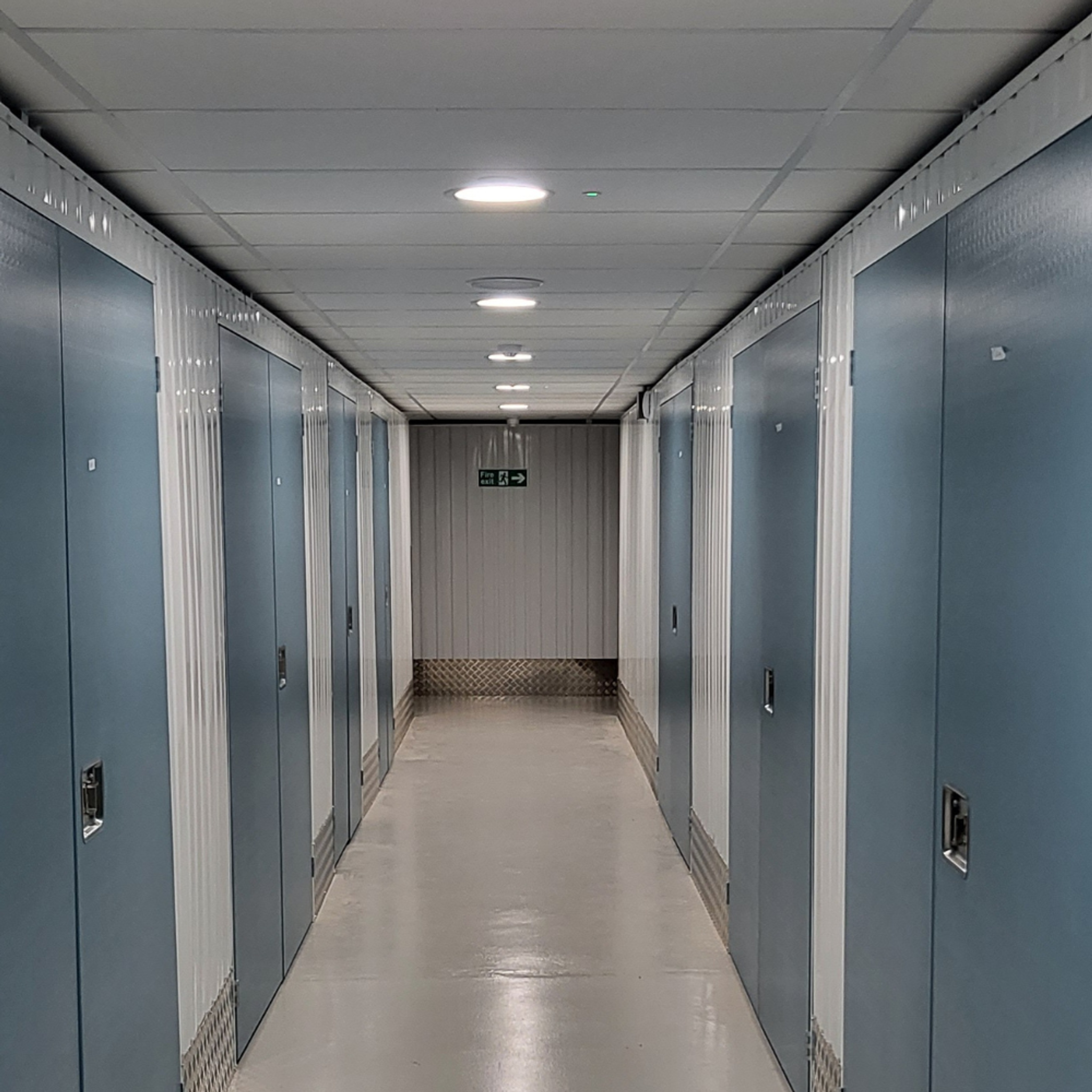

Key takeaways
The Regulatory Reform (Fire Safety) Order 2005 makes facility operators legally responsible for fire safety on-site
Individual unit alarms, not just building-wide CCTV, are the mark of a properly equipped facility
You're responsible for insuring your belongings in storage; the facility operator isn't
Prohibited items including flammables and gas cylinders put you and other renters at genuine risk
Below is a complete reference: the regulations operators must follow, what to expect from a serious facility, renter obligations, emergency procedures, and a practical safety checklist for every visit.
What UK law requires from self storage operators
The central piece of legislation governing fire safety in UK self storage is the Regulatory Reform (Fire Safety) Order 2005. Under this law, anyone who owns or manages a storage facility is classed as the "responsible person" and must:
- Carry out and regularly review a formal Fire Risk Assessment covering the entire premises.
- Take practical steps to reduce the risk of fire starting or spreading on-site.
- Put clear emergency procedures in place to protect anyone on the premises.
New builds and conversions must also comply with Approved Document B of the UK Building Regulations, covering fire-resistant construction materials, means of escape, compartmentation between units, alarm systems, and emergency service access.
There is also a voluntary British Standard specific to self storage: BS EN 15696:2008. Facilities built to this standard have gone beyond the legal minimum in construction and compartmentalisation.
The SSA UK Membership Standard
On top of the statutory framework, the SSA UK operates a Membership Standard that all members must follow. Members are required to have CCTV monitoring, a secure and defined perimeter, and full compliance with fire and health and safety regulations. They must also inform customers about prohibited items before contracts are signed, and request multiple forms of ID.
It's a framework Fred de Ryckman de Betz, HOLD's founder, knows from the inside. He chaired the SSA UK before co-founding HOLD in 2023, having worked in the industry since 2006. SSA UK membership is the clearest single signal that a facility is operating to a serious, independently verified standard.
Security standards: what to look for in a UK facility
A well-equipped self storage facility will offer the following security layers:
Feature | What it means in practice |
|---|---|
24-hour CCTV | Surveillance cameras covering all access points, corridors, and loading areas continuously |
Access control | PIN, key card, or fob entry, logged per visit |
Individual unit alarms | Every unit has its own alarm, not just the building |
Secure perimeter | Defined boundary preventing unauthorised site access |
Good lighting | Well-lit corridors and car parks deter criminal activity and improve personal safety |
Staffed reception | Trained team on-site during reception hours |
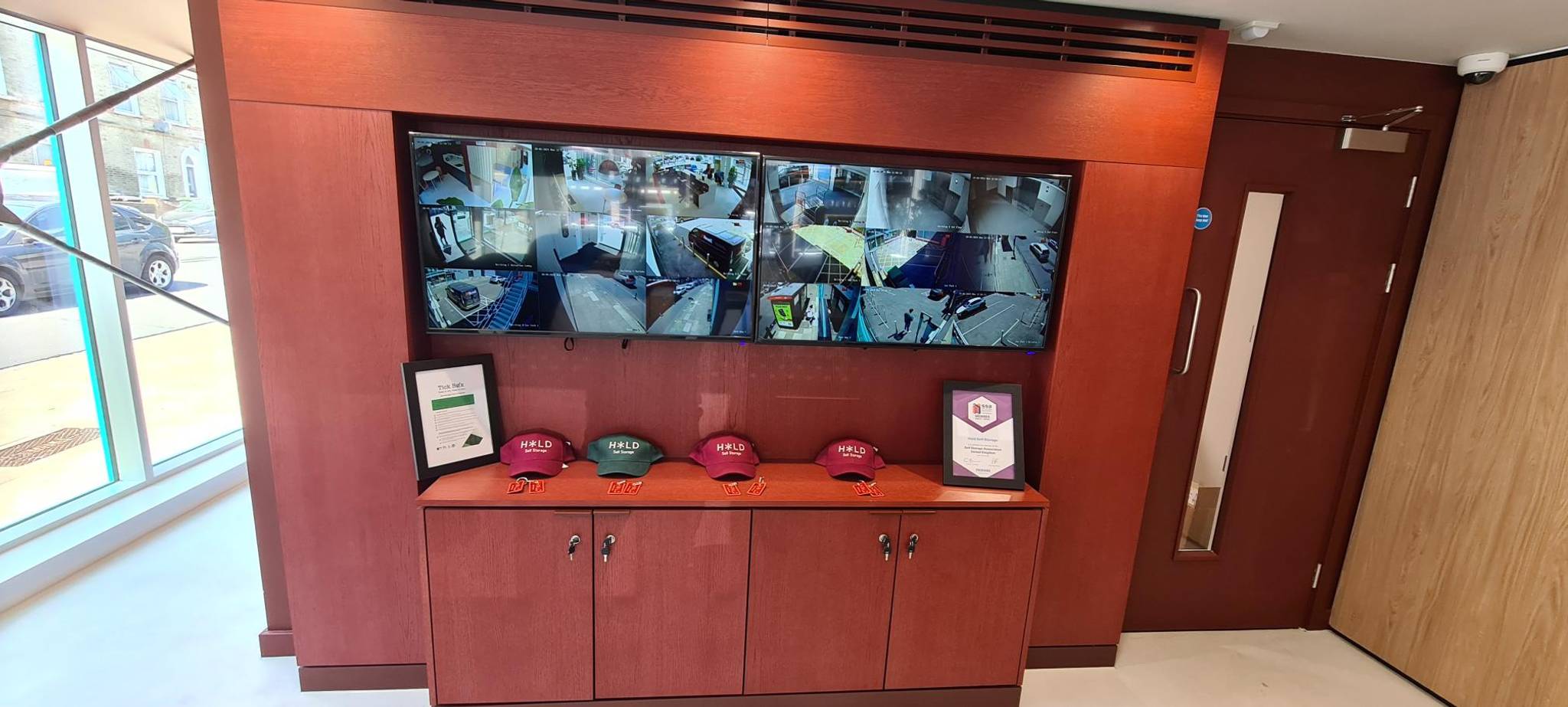
At HOLD's London storage facilities, every unit has its own individual alarm alongside 24-hour CCTV and PIN-controlled 24/7 access. Any attempt to access a unit outside your authorised visits is detected and recorded immediately.
When comparing facilities, ask specifically about individual unit alarms. Building-level CCTV is a baseline, not a complete security solution. A site that can't confirm per-unit alarms is worth questioning.
How to protect your unit from break-ins
Most break-ins at storage facilities target the lock, not the building. Lock cutting and lock picking are the most common methods, which means your choice of padlock is the first line of defence.
High-quality disc locks and cylinder locks are significantly harder to cut than standard padlocks. Using a low-grade lock can also affect your insurance: some insurers may reject claims if the lock on the unit was considered inadequate.
You can order high-quality padlocks online at the HOLD Box shop.
Beyond the lock, a few habits make a real difference:
- Label boxes generically rather than by contents. A box marked "electronics" or "jewellery" is a target. Use numbers or room names instead.
- Keep your access codes and keys strictly confidential. Don't share them beyond people who genuinely need them.
- Don't discuss what you're storing with other customers on-site.
- Choose an indoor unit over an outdoor container where possible. Indoor units benefit from the building's wider security measures and are harder to access undetected.
- Check your unit periodically, even if you don't need to retrieve anything. Regular visits mean you'd notice a tampered lock or forced entry quickly.
Fire safety in self storage: what renters need to know
UK storage facilities are designed with fire compartmentation built in. Units are separated by fire-resistant walls, and most operators install fire detection systems throughout the building, with better-equipped facilities also running active suppression systems. Fire exits must be clearly marked and emergency procedures posted at all times.
If a fire alarm sounds while you're on-site, leave immediately via the nearest marked exit. Don't go back for your belongings. Well-run sites conduct fire drills and staff are trained to act quickly. Your safety takes priority over anything inside your unit.
Report anything suspicious, including smoke, burning smells, or damaged fire safety equipment, to staff immediately rather than investigating yourself.
What you can't store in a UK self storage unit
UK storage contracts are based on the SSA UK standard, and the following items are prohibited at virtually all facilities:
Always prohibited
Flammable or combustible liquids (petrol, diesel, solvents)
Gas cylinders and compressed gas containers
Firearms, ammunition, and explosives*
Hazardous, corrosive, or toxic chemicals
Living creatures (animals or plants)
Perishable food
Stolen or illegally obtained goods
Cash, bonds, or negotiable financial documents
*Under the Firearms Act 1968, firearms must be stored at a registered premises with approved security. Self storage facilities don't meet this requirement, and doing so is a criminal offence.
Often prohibited (check your specific contract)
Tyres (high fire risk)
Lithium-ion batteries and power banks*
Large quantities of aerosols
Non-standard battery packs and power cells
*E-bikes and e-scooters with lithium batteries are subject to quantity limits at many facilities rather than outright prohibition. Check your contract.
If a prohibited item contributes to a fire and damages other renters' belongings, your liability doesn't stop at contract termination. If you're unsure whether something is permitted, ask before you store it.
Can you suffocate in a self storage unit?
The risk during a typical visit is low. Storage units have limited ventilation and aren't designed for occupation, but oxygen depletion isn't a meaningful concern during a standard 20 to 60 minute session. The risk increases if you're in a small unit with the door fully closed for an extended period, or if the door swings shut while you're working alone.
Don't let the door close behind you when you're working inside. Many facilities provide door-stop hooks for this reason. If yours doesn't, prop it before you start.
Sleeping in or living in a storage unit is prohibited under all standard UK rental contracts and puts the facility in breach of the Regulatory Reform (Fire Safety) Order 2005.
Storage buildings aren't constructed to the fire escape, emergency lighting, or suppression standards required for residential occupation. Any facility that discovers residential use is legally required to act.
Damp, moisture and temperature
Damp is one of the most common causes of damaged belongings in storage, and most of it's preventable. Condensation forms when warm, humid air meets cooler surfaces inside a unit, and mould can take hold on textiles, paper, and wood within weeks under the right conditions.
Some facilities offer fully climate-controlled units that regulate both temperature and humidity. HOLD's units are not climate-controlled, but they are dry, well-ventilated, and maintained to a standard that suits the vast majority of personal and business storage needs, including furniture, clothing, documents, and electronics.
For the small number of items that genuinely require strict climate control (such as fine art or vintage wine) a specialist facility may be the right choice. For everything else, following the steps below is sufficient protection:
- Dry everything thoroughly before storing, including upholstered furniture, clothing, and bedding.
- Use silica gel desiccant packets inside boxes and sealed containers.
- Avoid packing items directly against external walls.
- Raise furniture off the floor on pallets or boards where possible.
Check your unit periodically for signs of water ingress, particularly after heavy rain. Report any moisture or leaks to the facility promptly.
For a full breakdown on preventing damp damage in your unit, see keeping moisture out of your storage unit.
Pests are a related risk. Poor hygiene and any trace of perishable food attract rodents and insects. Good facilities include pest control as standard, but renters are the main line of defence: follow the prohibited items list strictly, clean items before storing them, and seal boxes properly.
Personal safety when visiting your unit
The vast majority of self storage visits are completely uneventful. But a few practical habits make every visit safer, particularly if you visit alone or outside staffed hours.
- Tell someone where you're going if you're visiting late or alone, particularly at 24-hour sites.
- Keep the unit door propped open while you're working inside so you're visible and accessible.
- If you notice anything unusual, such as a damaged lock, signs of tampering, or someone behaving suspiciously, don't investigate. Report it to staff or call 999 if you feel unsafe.
- Know where the fire exits are on your first visit. You won't have time to find them in an emergency.
If you're ever locked inside a unit, call for help immediately. You can generally get a signal from inside the building, and staff respond quickly.
Storage unit insurance in the UK: your responsibility, not the facility's
UK storage operators don't insure your belongings as standard. Your contract will confirm this explicitly. The operator is responsible for the building's security and fire safety; insuring the contents of your unit is down to you.
Your options are:
- Home contents insurance: Some policies extend to goods held in self storage, but many include sub-limits or specific exclusions. Read the policy wording carefully before assuming any cover exists.
- Dedicated storage insurance: Several UK insurers offer policies specifically written for goods in self storage, typically covering fire, theft, flood, and accidental damage.
- The facility's own protection product: HOLD offers StoreProtect, a contents protection add-on available at the point of booking.
Keep a written inventory of what you're storing with estimated replacement values. You'll need it if you ever need to make a claim.
Self storage safety checklist
Use this before your first visit and keep it in mind throughout your rental.
Before you move in
- Confirm the facility is an SSA UK member.
- Read the prohibited items list in your contract before storing anything.
- Check whether your home contents insurance covers goods in storage.
- Arrange dedicated cover or your facility's protection product if it doesn't.
- Create a detailed inventory of what you're storing, with estimated values and photos of high-value items.
- Choose a high-quality disc lock or cylinder lock rather than a standard padlock; low-grade locks can result in insurance claim rejections.
- Label boxes generically (by room or number) rather than by contents to avoid advertising what's inside.
On every visit
- Prop the unit door open before you start working inside.
- Don't leave electrical items plugged in or charging when you leave.
- Check for signs of damp, moisture, or water ingress.
- Lock your unit securely and confirm the alarm is active before leaving.
- Report any security concerns or suspicious activity to staff.
Ongoing
- Review your insurance cover if you add high-value items to your unit.
- Never store prohibited items, even temporarily.
- Check your unit every few months if it contains items sensitive to damp or temperature change.
How to choose a safe self storage facility in the UK
Quality varies considerably across the UK's thousands of storage sites. When comparing facilities, ask::
- Is the operator an SSA UK member? Members are held to a published Membership Standard covering security, fire safety, and customer obligations.
- Does the facility have individually alarmed units, not just building-level CCTV?
- Is access PIN or fob controlled and logged per visit?
- Is fire suppression equipment (not just detection) installed throughout the building?
- Does the site ask for ID and explain prohibited items clearly before you sign?
- Are the terms and conditions written in plain language and freely available?
- Is the facility clean, well-lit, and staffed during reception hours?
A facility that gives confident, specific answers to all of these is operating at a serious level. See our London self storage FAQ for more on what to expect.
The complete picture on self storage safety
UK self storage is more tightly regulated than most people expect. The Fire Safety Order 2005, the SSA UK Membership Standard, and Approved Document B set a floor that serious operators work well above.
Your responsibilities as a renter are simpler: store only permitted items, insure your contents, and use the checklist above. Most people who do those things never have a problem.
Store safely at HOLD Kings Cross
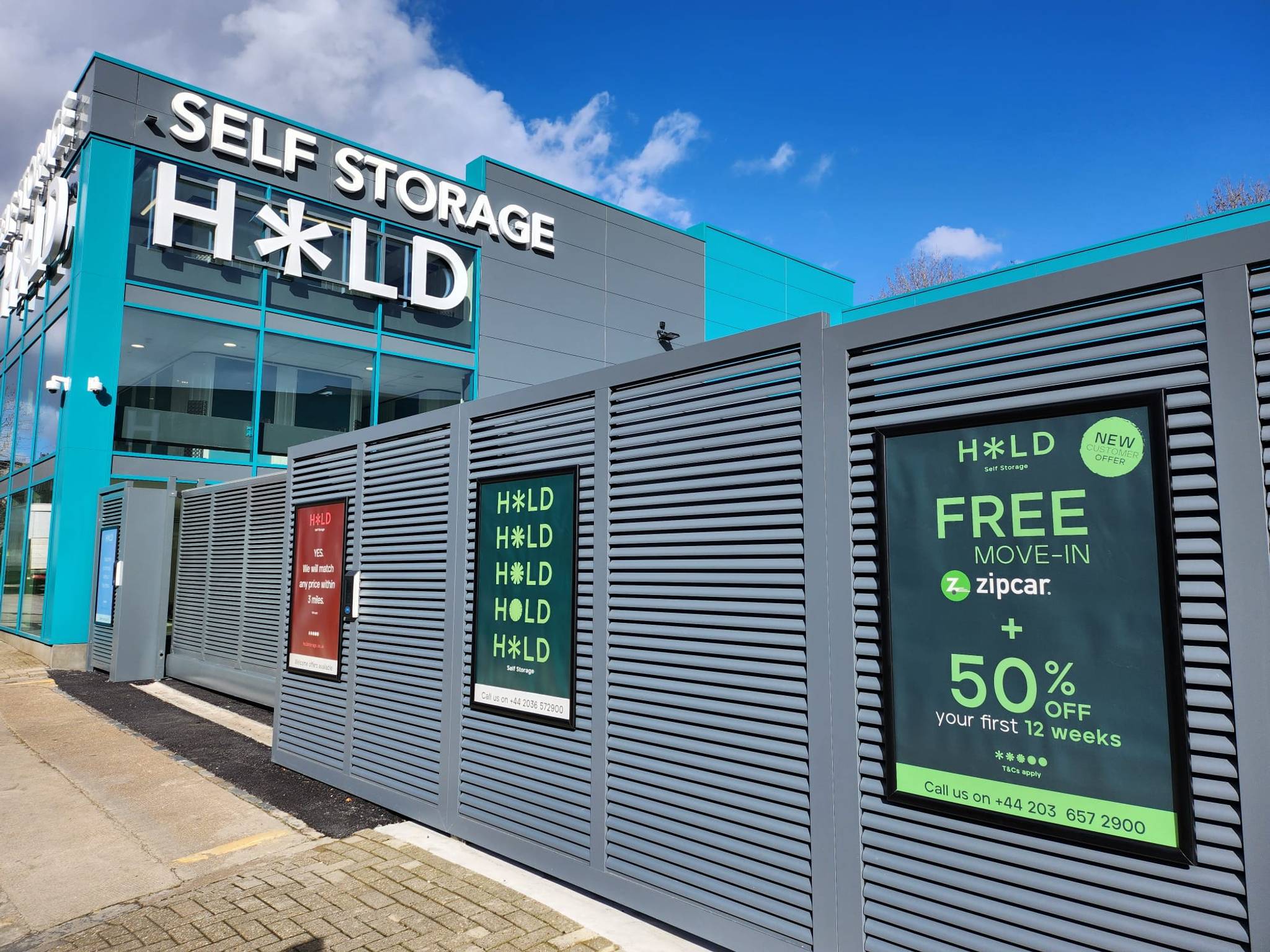
HOLD operates secure self storage across London, with 24-hour CCTV, individually alarmed units, and 24/7 access available on request. Units start from £10.75 per week with no fixed contracts, a price match guarantee within 3 miles, and 50% off for your first 8 weeks. New customers also get a free move-in van. Add StoreProtect contents cover at the point of booking.
Yes, at well-run facilities. SSA UK members must meet a published Membership Standard covering CCTV, a secure perimeter, and full compliance with fire and health and safety regulations. The Regulatory Reform (Fire Safety) Order 2005 also imposes strict legal duties on all facility operators regardless of SSA membership status.
The standard prohibited list includes flammables (petrol, diesel, solvents), gas cylinders, firearms and ammunition, hazardous chemicals, living creatures, perishable food, and stolen goods. Many facilities also prohibit tyres due to fire risk. Your signed contract is the definitive list for your specific facility.
Storage units have limited ventilation and aren't designed for occupation, but oxygen depletion isn't a meaningful concern during a standard 20 to 60 minute visit. The risk increases if you're in a small unit with the door fully closed for an extended period. Don't let the door close behind you when working inside, and never sleep or spend extended time in a storage unit.
You are. UK storage operators are responsible for the security and fire safety of the building, not the contents of individual units. Check whether your home contents policy extends to goods in storage, and consider dedicated storage insurance or your facility's own protection product if it doesn't.
Look for:
- SSA UK membership
- Individually alarmed units
- PIN or fob-controlled access logged per visit
- Fire suppression systems
- Clear communication about prohibited items
- Staff on-site during reception hours.
A well-run facility will answer specific security questions directly and without hesitation.
Sleeping in a storage unit is prohibited under all standard UK rental contracts and puts the facility in breach of the Regulatory Reform (Fire Safety) Order 2005, as storage buildings can't meet the escape route, emergency lighting, or suppression standards required for residential occupation. Any facility that discovers residential use is legally required to act, and the occupant faces immediate contract termination.
Leave immediately via the nearest marked fire exit. Don't return to your unit for any reason. UK facilities are required to post emergency procedures clearly and staff are trained to manage evacuations. Belongings can be replaced or covered by insurance; your safety cannot.
The risk is low at well-managed facilities. Good operators include pest control as part of routine site maintenance. The main causes of pest problems are perishable food, dirty or damp items brought in by other renters, and poorly sealed boxes.
Follow the prohibited items rules, clean and dry everything before storing it, and use sealed plastic boxes rather than cardboard for any long-term storage to significantly reduce the risk.
Every unit is individually alarmed. The facility runs 24-hour CCTV, PIN-controlled entry at all access points, a monitored burglar alarm, and fire detection systems throughout. You padlock your own unit. Nobody from the HOLD team enters your storage unit. Every facility operates to SSA UK standards. Storage insurance through StoreProtect is available at point of booking.