

Key takeaways
If you’re renting, confirm lift bookings and parking rules before moving day.
Clutter and storage areas are the biggest drivers of packing time.
Kitchen breakables are the main risk, so allow extra hours.
Book professional movers early if your timeline is tight.
Pack non-essentials first, then label every box by room.
If you’re moving house, HOLD’s climate secure storage offers 24-hour access (on request) while you pack in stages.
Work out your estimated packing time quickly
Moving house feels manageable until packing starts, because it’s really a series of small decisions. Most people need to spread packing over several days, because they can’t dedicate full days to it. If you’re in a flat, factor in access, lift bookings, and parking rules, as they can slow the day down.
Start by estimating time by home size, then adjust for how full each room is and how much you need to declutter. Once you’ve got a realistic range, you can gather supplies, plan effectively, and avoid a last-week scramble.
Typical packing timelines by home size
Use this as your first estimate. It assumes average clutter, one to two people, and normal access, but the average time still changes fast based on your situation.
Home type | Typical DIY timeline | Typical pro timeline |
|---|---|---|
Studio / 1 bedroom apartment | 1–2 days | 0.5–1 day |
Two-bed flat / bedroom apartment | 2–3 days | 1 day |
3-bedroom home / bedroom house | 3–5 days | 1–2 days |
4-bedroom house / bedroom house | 4–6 days | 1–2 days |
Remember, the baseline changes fast with several factors. That’s why your estimated packing time should be a range, not a single number, and why the factors affecting packing time matter.
Pack one room at a time to stay in control
A room-by-room packing process is the quickest way to stay organised. You finish one room, close the door, and move on, instead of spreading piles across the house.
It also makes it easier to label boxes properly, track boxes needed, and avoid mixing cables, screws, and all the things when you’re dealing with all the boxes. If family members are helping, or you book professional packers, they can work faster when each room has a clear plan.
Room-by-room time estimates (DIY)
These ranges include basic sorting, wrapping, boxing, and labelling.
Room | Estimated time (DIY) | Common slowdowns |
|---|---|---|
Bedroom | 2–5 hours | Wardrobes, under-bed storage, lots of clothing |
Living room | 3–6 hours | Books, décor, delicate items, cables |
Dining room | 2–4 hours | Glassware, display pieces, serving dishes |
Kitchen | 4–8 hours | Fragile items, odd shapes, food cupboards |
Bathroom | 1–2 hours | Liquids, medicines, small items |
Loft / garage | 3–8+ hours | Storage areas and “maybe useful” gear |
Tip: The kitchen often takes the longest to pack because it’s dense with breakables, including kitchen appliances. Plan extra time there, especially if you have more rooms overall, and use extra protection on anything that can chip or crack.
The factors that change your packing time
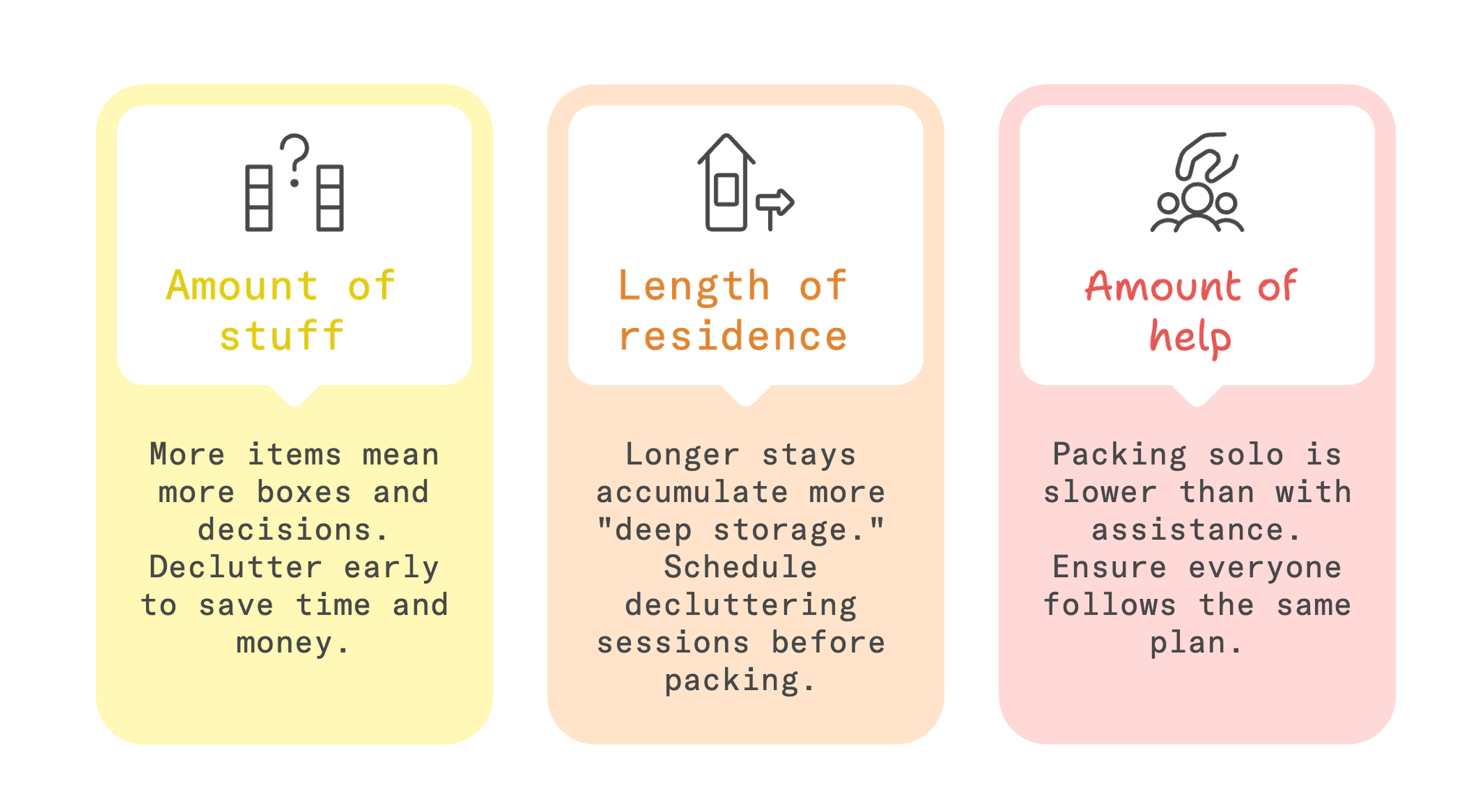
Most timelines swing for the same few reasons. Get these under control and packing becomes far more predictable.
How much you’re taking
More stuff means more boxes and more decisions. If you’re packing items you don’t actually want, you end up handling them twice.
To save money and cut packing time, clear out unwanted items early by donating, selling, or recycling, then move on to the next category so you’re not trying to pack things and declutter at the same time. Even one cupboard or drawer can shave hours off your week and reduce stress.
How long you’ve lived there
The longer you’ve been in a place, the more “deep storage” builds up. That’s why long-term homes often take longer to pack than a short-term let, even if the headline home size is the same.
If you’ve been there for years, schedule decluttering sessions before you open a single roll of packing tape.
How much help you have
Packing solo is slower than packing with a partner, friends, or professional packers. Extra hands only help if everyone sticks to the same room-by-room plan.
If time is tight, ask your removals firm or removal company about a full packing service or a part-pack option (for example, just the kitchen or fragile items). It’s often the quickest way to cut the most time, especially if you’re also coordinating a moving company for the transport.
Gather supplies once so you don’t lose momentum
Before you start, get your supplies together so you’re not stopping mid-room. The biggest time-waster is running out of packing supplies or moving boxes when you’re on a roll.
Aim for sturdy boxes in a few sizes, smaller boxes for heavy items, bin bags for rubbish and soft textiles, plus a marker and labels.
For breakables, add packing paper and bubble wrap, plus the core packing materials like packing tape, so items don’t rattle in transit and you’re not improvising halfway through wrapping fragile items.
If you’re short on supplies, HOLD’s box shop makes it easy to pick up the essentials in one go.
A simple method to estimate your packing time
If you want a realistic estimate you can plan around, do this:
- Count bedrooms, then list every storage area (loft, shed, understairs).
- Assign each room a time range from the table above.
- Add extra sorting time if you have more belongings than average, plus time for sentimental items you’ll handle more carefully.
As a rule of thumb, many 3–4 bed moves land around 100–150 boxes, which is why solo packing often stretches over several evenings. If you only manage one box a day, the schedule can drag on for weeks, even in a small flat or 1 bedroom apartment; and in a larger house it can stretch into months.
A simple way to estimate is to multiply bedrooms by a time-per-room average, then add extra time for clutter and sentimental items.
A simple 6–8 week packing timeline
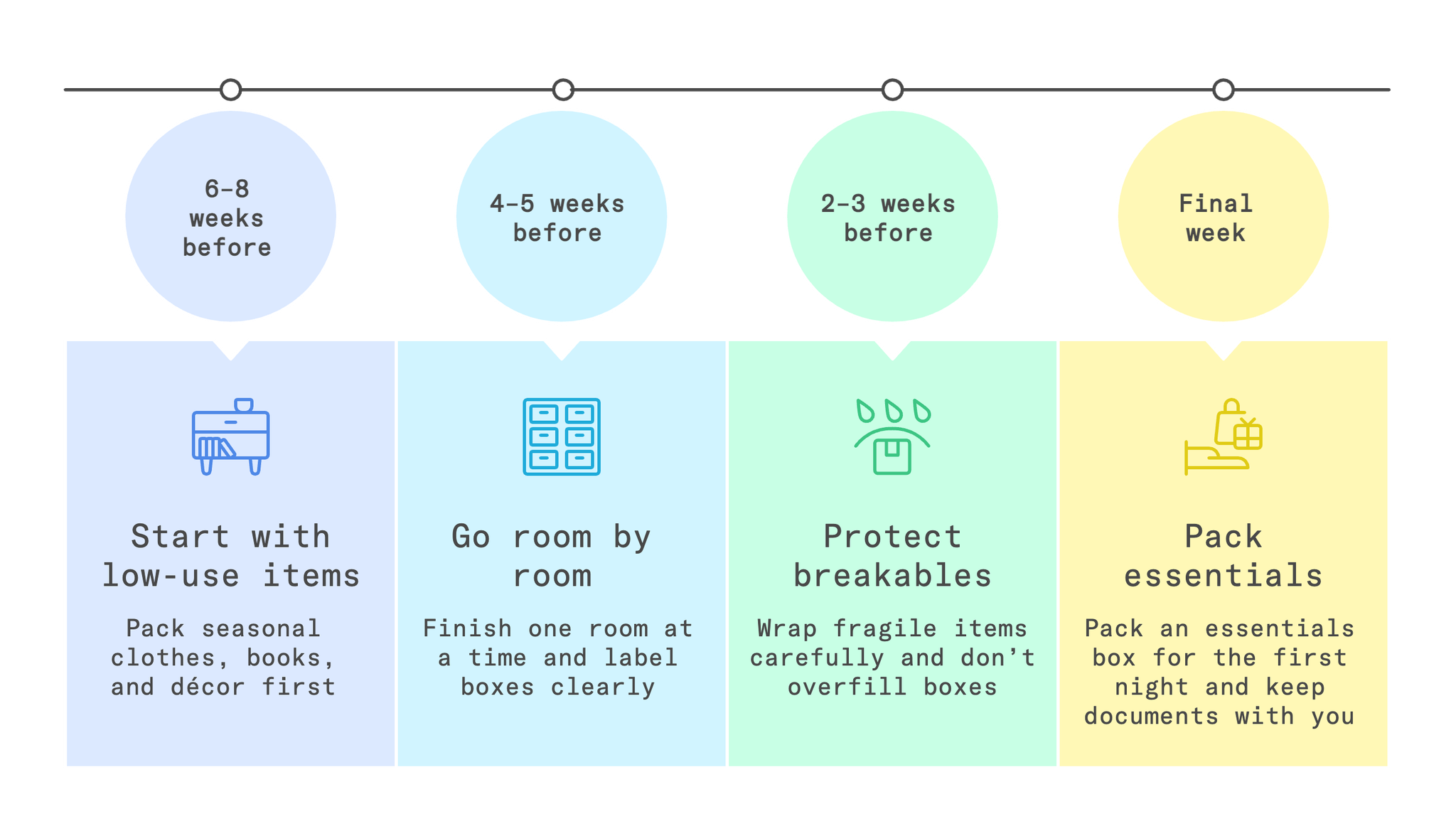
6–8 weeks before: start with low-use items
Pack seasonal clothes, books, spare bedding, and décor first. You’ll make progress without disrupting daily life.
Keep sealed boxes in one corner of each room so the house stays usable, and start packing the least-used cupboards first so you don’t undo your own work later.
Now’s also a good time to change the address on your driving licence
4–5 weeks before: go room by room and label clearly
Finish one room before you move on. Label each box with the room and a short contents note to speed up unpacking.
If you’re numbering boxes, use a simple system like “Kitchen 1/12”.
2–3 weeks before: protect breakables properly
This is the point to slow down and pack fragile items properly. Wrap, fill gaps, and don’t overfill boxes so nothing gets crushed, and prioritise wrapping fragile items that you’ll need to stack near the bottom of the van.
If you’re using a removals firm, ask how they prefer fragile boxes labelled and stacked.
Final week: pack essentials for moving day
Pack an essentials box for the first night: toiletries, chargers, kettle, snacks, and paper plates. Keep important documents with you, not in the van.
Aim to finish the last packing the day before, so moving day feels calmer and you get a smooth transition into your new home.
After you’ve moved, set up Council Tax as soon as you can
DIY vs professional packing: pros and cons
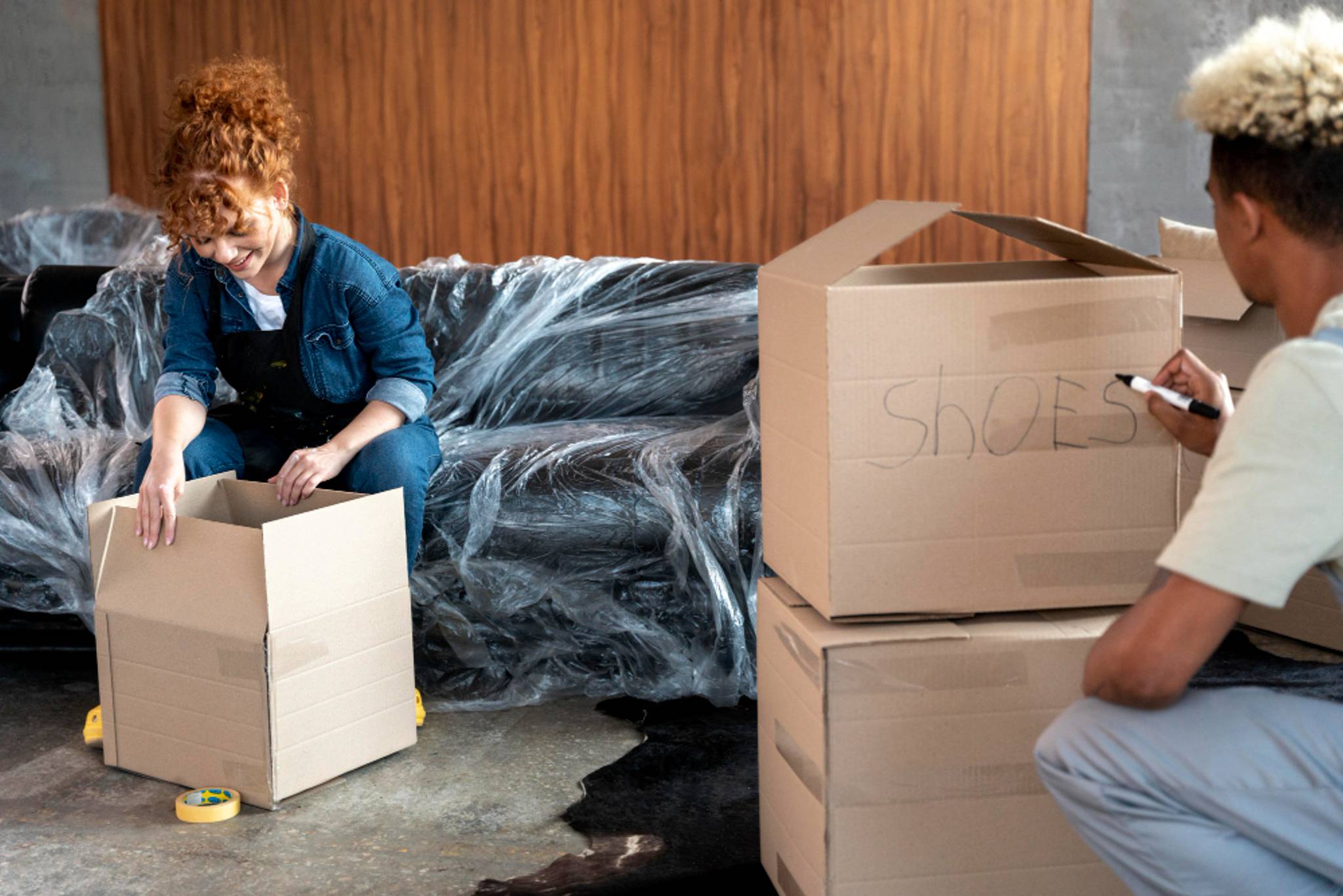
DIY packing
Pros
- Usually cheaper, especially if you already have packing materials.
- You stay in control of what goes where and how you label boxes.
- You can pack one room at a time and spread the packing process over evenings.
Cons
- Packing time often stretches if you’re working around life and routines.
- It’s easier to underestimate how many moving boxes you’ll need.
- More risk of breakages if wrapping fragile items is rushed.
Professional packing services

Pros
- Fast: many homes can be packed in 1–2 days.
- Less mental load in the final week, especially with kids or work.
- Professional packers bring a system and know how to protect items for safe transport.
Cons
- Higher cost, and price varies with volume and access.
- You’ll need to agree what not to pack (documents, valuables, daily essentials).
- Availability can be tight, so book professional movers early.
If you want a middle ground, many removal firms or removal companies offer part-pack options, such as kitchen-only or fragile items-only, rather than a full packing service.
Need help choosing London lovers? Check out our guide below.
Pack faster without damage: the non-negotiables
Use smaller boxes for heavy items so they don’t split and you can lift safely. Fill gaps so boxes don’t crush when stacked, and use extra protection if anything will shift in transit.
For breakables, wrap properly with packing paper or bubble wrap, then keep heavier items at the bottom. A few extra minutes here can save hours of cleaning up and replacing damaged items.
London and long-distance moves: what changes
Moving locally: access often matters more than mileage. In flats, check lift booking rules, loading bays, and whether you need a parking suspension for a local move.
Long-distance move: your deadlines matter more than the distance. Confirm your collection time and any cut-off for loading, then plan your packing so the last boxes are the ones you’ll need first.
Cross-country move: ask your moving company or removal company about timing constraints and whether any van lines (linehaul networks) they use have strict loading windows, so you’re not caught out on the day.
Tip: Make sure to set up Royal Mail Redirection so you don’t miss important post.
How self storage can support your move
Self storage can make moving house far easier when dates don’t line up. It lets you pack in stages, keep rooms usable, and move bulky items out early so you’re not living around boxes.
It’s also useful if you’re waiting on keys, renovating, downsizing, or need a buffer between viewings, removals, and cleaning.
Already have a storage facility in mind? Read our guide on how to pack a storage unit, and explore our storage unit size guide to make the most of your space.
HOLD moving house storage
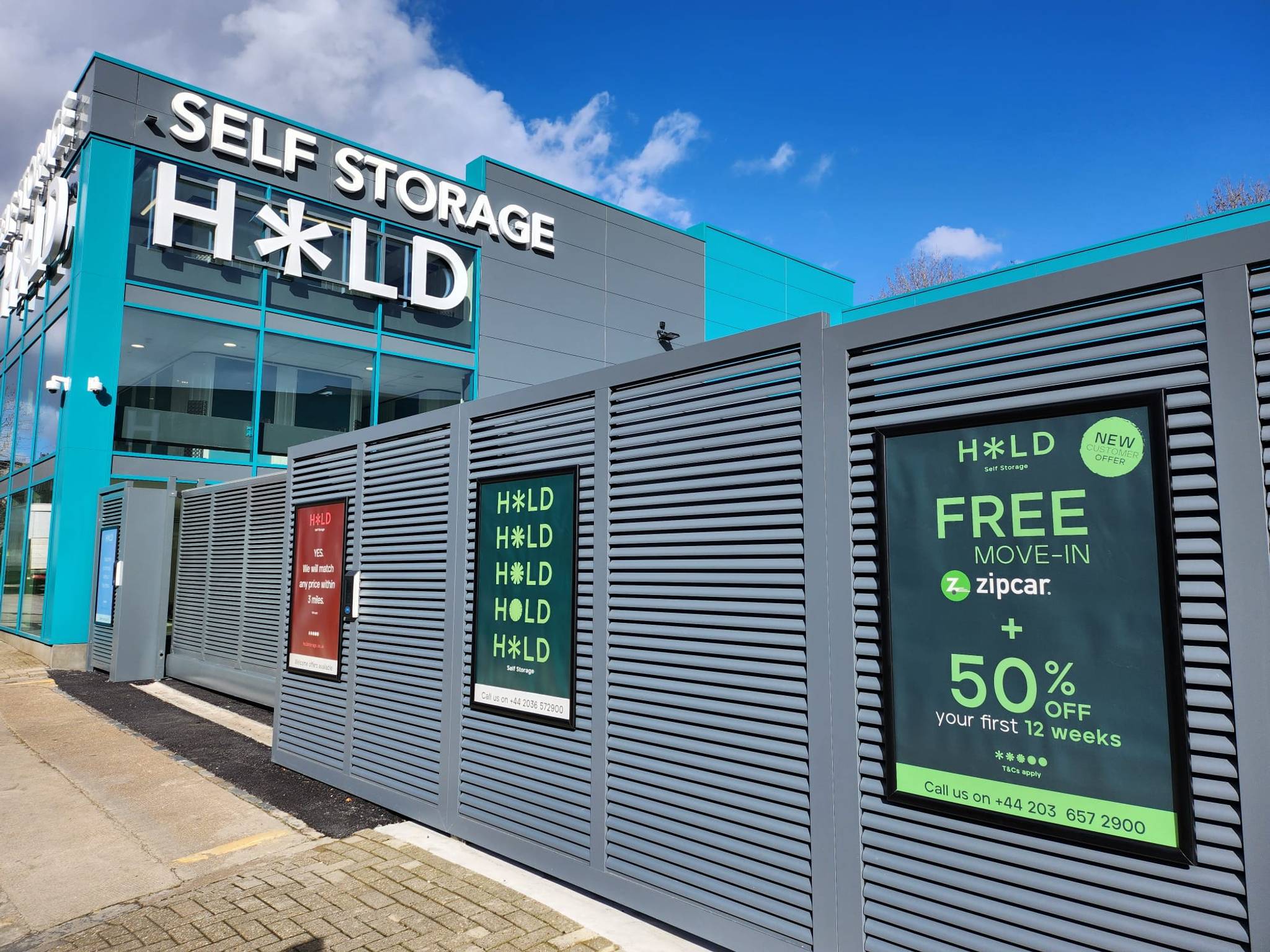
If you’re between dates, HOLD Self Storage provides a simple way to store packed boxes and larger items as you go. You’ll get strong security, flexible terms, with 24-hour access available on request, so you can drop off what’s done and collect it when you’re ready.
Get a guaranteed price match and 50% off for the first 8 weeks.
Frequently Asked Questions
If you pack 60–90 minutes a night, a bedroom house often spreads over 2–3 weeks. The packing time drops fast if you start early and stick to one room at a time.
Box counts vary with belongings, but many 3–4 bed moves land around 100–150 boxes. That can total roughly 50–75 hours of packing, which is why it often takes several evenings if you’re doing it solo.
Begin packing around 6–8 weeks before your moving date, starting with non-essentials. Start early and you’ll avoid last minute stress.
It can be, but usually only with a very small home, minimal belongings, or professional packers. If you’re attempting it DIY, focus on essentials, pack one room at a time, and accept that some sorting may need to happen after the move.
Declutter first, gather all packing supplies in advance, then pack one room at a time and label every box. If time is really tight, book professional packing services for the kitchen and fragile items.
The kitchen is usually the slowest because it’s full of fragile items and awkward shapes. Give yourself extra time there, and don’t rush the wrapping.
Solo packing nearly always takes longer because you can’t run parallel tasks (wrapping, taping, labelling) at the same time. If you’re on your own, spread it out, set a nightly target, and start 6–8 weeks ahead.
They can be if your timeline is tight, you’re short on help, or you have lots of fragile items. Professional packing services often finish in 1–2 days with the right team.
Absolutely. HOLD’s Box Shop has a full range of high-quality moving boxes, wraps, and furniture covers.